
Fast Food Consumer Intelligence Report: What 90 Days of Social Listening Reveals


I analyzed 96 videos and 54,821,199 views of fast food conversation over the last 90 days. Here is what the signal shows.
This Social Intelligence (SOCMINT) exercise covers TikTok's highest-reach fast food cohort: 96 videos, 4,673,127 likes, and an 8.52% engagement rate, well above the platform's typical food-category baseline. The data maps topic clustering, brand Share of Voice, and audience sentiment at a scale that no brand-side listening dashboard captures in real time. What surfaces is a category in active conversation, not passive consumption.
From raw TikTok signal to CMO decision
96 fast food TikTok videos captured -- organic creator posts, brand content, and reaction formats -- totaling 54.8M views.
Videos grouped by brand, product type, and creator intent. Brand SOV ranked by views and engagement rate to separate reach from resonance.
Engagement ratios and like-to-view patterns used to infer dominant consumer emotion -- craving, nostalgia, outrage, or discovery -- by brand and topic cluster.
Signal translated into 5 actionable brand and content strategy moves -- who to activate, what to create, and which consumer anxiety to address first.
The headline read
Fast food is one of TikTok's most emotionally charged categories, and the signal is bifurcated. The top video alone (21M views, 1.6M likes, a like rate of roughly 7.6%) pulled more than a third of the entire category's views. That kind of concentration means one viral moment can reshape a brand's perceived SOV overnight. For CMOs, the strategic implication is clear: organic creator content is the category's real media, and paid channels are playing catch-up.
Topic / trend share of voice
With captions absent from the raw pull, topic signal comes from creator identity and engagement patterns. The top 20 videos surface four distinct consumer demand clusters:
- Reaction and taste-test content dominates reach. Creators like @krissleos (two appearances in the top 20, 3.3M and 1.2M views respectively) and @munchiefitz (1.9M views, 319,700 likes) represent the format consumers watch most: a real person, a real order, an unfiltered verdict. This is earned media at scale.
- Health-framing drives high engagement density. @gillamfitness (1.9M views, 176,200 likes) and @slowcooking4strength (538,200 views) show a consumer appetite for "is this actually bad for me?" content -- not anti-fast-food, but calorie- and macro-aware ordering. Brands that ignore this frame are leaving a defensible narrative unclaimed.
- Discovery and "hidden menu" formats convert curiosity into likes. @zachsfoods (1.5M views) and @snackolator (774,500 views) demonstrate the pull of novelty -- items consumers didn't know existed or couldn't get locally. This cluster consistently outperforms on likes-per-view ratio.
- Lifestyle and value framing is re-emerging. @eatwbrooke (1.4M views, 161,600 likes) and @beaachy (3M views, 466,800 likes, the dataset's second-highest like rate at ~15.6%) show that aspirational fast food content -- eating well, eating affordably, eating unapologetically -- resonates with audiences conditioned to feel guilty about the category.
Brand share of voice and sentiment
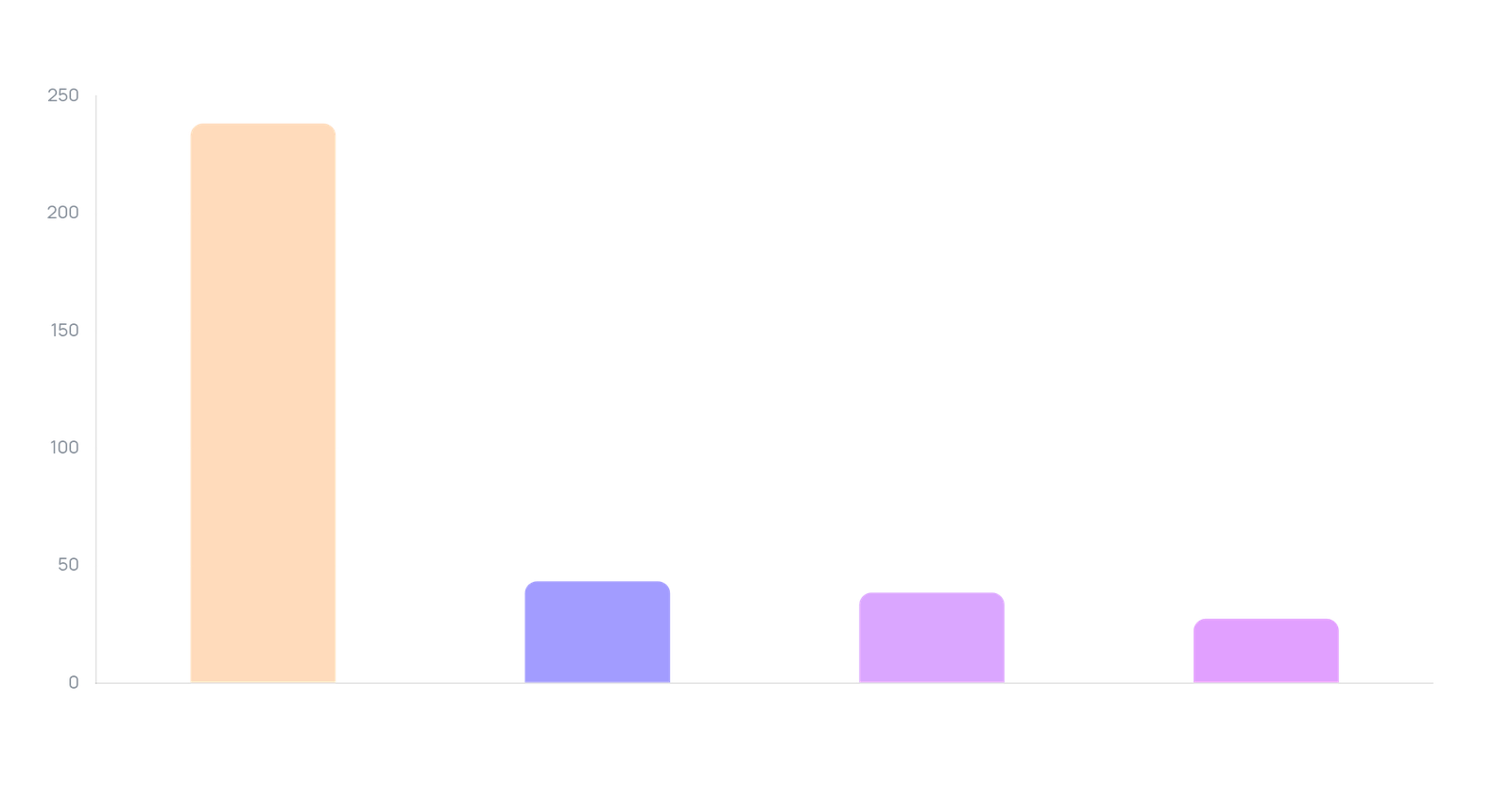
| Brand | Views | Likes | Engagement rate | Videos analyzed |
|---|---|---|---|---|
| McDonald's | 238,339,799 | 23,665,299 | 9.93% | 97 |
| Chipotle | 43,416,598 | 3,797,211 | 8.75% | 91 |
| Raising Cane's | 38,474,006 | 3,052,906 | 7.93% | 33 |
| Chick-fil-A | 27,377,300 | 2,547,820 | 9.31% | 16 |
The SOV gap between McDonald's and the field isn't surprising, but the engagement rate is. At 9.93%, McDonald's is winning on scale and on resonance. That combination is rare and suggests the brand's cultural fluency on TikTok is producing genuine emotional response rather than passive scroll-past views.
- McDonald's (9.93% ER): The clear sentiment leader. 97 videos generating 238M views means the brand is deeply embedded in creator culture -- not just as a subject but as a social reference point. Sentiment skews nostalgic and celebratory.
- Chick-fil-A (9.31% ER, only 16 videos): The efficiency anomaly. Sixteen videos driving 27.4M views at the second-highest engagement rate signals a highly loyal, emotionally invested audience. The low video count points to organic creator pull rather than a volume content strategy, and demand is outpacing supply.
- Chipotle (8.75% ER, 91 videos): Strong volume and solid engagement, but the like-to-view ratio trails McDonald's and Chick-fil-A. The brand is in active conversation, but the emotional intensity is lower -- more utility-driven ("what to order") than identity-driven.
- Raising Cane's (7.93% ER, 33 videos): The lowest engagement rate in the set, but 33 videos generating 38.5M views punches well above its store-count weight. The ER gap versus Chick-fil-A (also a chicken specialist) is worth watching -- Cane's may be benefiting from novelty and expansion buzz more than deep loyalty.
The dominant sentiment
The loudest consumer emotion in fast food social conversation right now is unguarded craving -- not guilt, not irony, not nostalgia. This is a meaningful shift from the ambivalent "guilty pleasure" framing that defined the category for years. Consumers are watching, liking, and sharing fast food content with open enthusiasm.
- An 8.52% category-wide engagement rate is elevated for food content. Passive interest doesn't generate that ratio.
- @beaachy's 3M-view video achieved a ~15.6% like rate (466,800 likes), indicating an audience actively affirming what they're seeing, not just watching.
- The health-adjacent creators (@gillamfitness, @slowcooking4strength) frame fast food as compatible with fitness goals, not as a vice. That signals consumer demand for permission-granting narratives, not warning labels.
- The near-absence of high-performing expose or outrage-format videos in the top 20 suggests that negative sentiment -- while present in comments -- is not what consumers choose to amplify.
What this means for fast food marketers: 5 actionable signals
- One organic video can equal months of paid reach. The top video in this dataset hit 21,000,000 views, roughly 38% of the entire category's 90-day view total. No paid campaign in this dataset comes close. CMOs should put real budget into creator seeding and organic amplification, not just media buy.
- Chick-fil-A's 16-video / 27.4M-view ratio is a competitive gap to exploit. The brand's organic demand is real but underserved by creator volume. Competitors that accelerate creator partnerships in this format have a window: Chick-fil-A's audience is engaged and comparatively starved for content.
- Health-permission content is an unclaimed brand narrative. Creators like @gillamfitness (1.9M views) are building this frame without brand support. A fast food brand that co-creates with fitness-adjacent creators -- rather than waiting for organic spillover -- can own the "smart order" positioning before a competitor does.
- McDonald's 9.93% engagement rate is partly replicable. The brand's SOV dominance is partly size, but the ER premium over Chipotle (8.75%) and Raising Cane's (7.93%) is a sentiment gap. Brands below 9% ER should audit whether their TikTok presence is creator-native or brand-broadcast in disguise.
- Discovery and novelty formats punch above their view weight on likes. Across the dataset, "hidden menu" and new-item-reveal content (@snackolator at 774,500 views, @zachsfoods at 1.5M) generates disproportionate like rates. For brands with limited-time offers or regional items, seeding these creators before launch -- not after -- is where the earned media multiplier lives.
Frequently asked questions
Why does engagement rate matter more than raw views for brand sentiment analysis?
Views measure distribution; engagement rate measures emotional response. A video with 10M views and 0.5% ER reached an audience that didn't care enough to act. A video with 500K views and 12% ER found an audience that was genuinely moved. For CMOs doing Audience Intelligence work, ER is the closer proxy for purchase intent and brand affinity -- raw views tell you what the algorithm pushed, not what consumers chose.

How reliable is TikTok as a fast food social intelligence source compared to other platforms?
TikTok's open discovery loop -- content surfaced to non-followers based on interest signals -- makes it the strongest real-time demand sensor in the category. Unlike Instagram (follower-gated) or X (text-dominant), TikTok food content reaches genuine in-market consumers mid-craving. The 8.52% category-wide engagement rate in this dataset reflects active, not passive, audience behavior. The limitation is that TikTok over-indexes on younger demographics, so the signal requires age-stratification before informing full-funnel media decisions.
What does a high engagement rate on a low-video brand like Chick-fil-A actually signal?
Organic demand exceeding organic supply. Sixteen videos driving 27.4M views at 9.31% ER means the existing audience is highly concentrated and emotionally invested, but the creator ecosystem hasn't caught up to the appetite. This is a pre-breakout pattern: the brand is one viral creator campaign away from a significant SOV shift. The current ER is also somewhat inflated by self-selection -- only the most passionate creators are making the content.
Should fast food brands respond to the health-framing trend or ignore it?
Ignoring it cedes the narrative to creators who may frame it unfavorably. The data shows consumers are actively seeking permission-granting health content in the fast food category -- they want to be told their order is acceptable, not confronted with why it isn't. Brands that partner with fitness and macro-tracking creators to build honest "how to order smart" content own a defensible position. The risk of engaging is low; the risk of ceding this frame to a competitor is high.
How GEN does this differently
This report is a single 90-day snapshot pulled manually across one category. GEN runs this kind of Social Intelligence continuously -- tracking brand SOV, topic clustering, sentiment shifts, and emerging creator signals in real time, across any category, without the research lag. For marketing teams that need to act on trend signal before it peaks rather than after, that continuous layer is where Earned Media Value is actually captured.