Top 10 Hooks to Try for Real Estate Content (and Why They Actually Work)


Most real estate hooks fail before the second sentence
The viewer doesn't know you, doesn't care about your brokerage, and won't wait for you to get to the point. The hook's only job is to make the next three seconds feel inevitable. Generic openers like "Hey everyone, today I'm going to talk about the market" lose that race every time. The 10 templates below lead with the result the viewer already wants, then let the rest of the content earn the watch.
How a winning real estate hook works
Name the exact situation the viewer is in -- overpaying, losing bids, missing inventory -- so they self-select immediately.
Tell the viewer exactly what they'll have or know by the end -- a number, a decision framework, a real walkthrough -- not a vague tip.
Show the house, the price tag, the contract, or yourself on camera speaking directly. Don't delay the proof behind a long intro.
End the hook loop with a micro-tease -- a surprising detail, a reveal, or a "wait for it" -- that makes scrolling away feel like a loss.
Winners vs. losers: the real pattern split
- Winners lead with the viewer's situation, show the property or data immediately, sound genuinely enthusiastic, and promise a clear payoff within three seconds.
- Losers open with "Hey guys, welcome back," hide the payoff behind a long setup, lean on hashtags and CTAs instead of content quality, and use generic market commentary with no local specificity.
- Winners use direct-to-camera delivery or real walkthrough footage; the creator's face and energy are part of the hook.
- Losers substitute green-screen or text-only slides when the topic calls for a physical walkthrough -- it signals "I don't have access to the real thing."
- Winners name a price, a neighborhood, a buyer profile, or a specific market quirk. Specificity is credibility.
- Losers stay vague to "appeal to everyone" and convert nobody.
10 hook templates for real estate creators
-
"This [city] home is listed at $[X] -- here's what you're actually getting"
Why it works: Price plus location anchors the exact buyer who can afford it. The "actually" signals insider knowledge the listing doesn't show.
Adapt it: Walk through the property immediately after. Show what the price buys -- the lot, the finishes, the catch.
Loser pattern it avoids: Opening with the full listing description before showing anything visual. -
"I lost this deal for my client -- here's exactly what went wrong"
Why it works: Failure stories earn trust faster than wins because they're rare and feel honest. Buyers and sellers both fear making the same mistake.
Adapt it: Be specific about the error (offer strategy, inspection waiver, timing) -- not vague regret.
Loser pattern it avoids: Humble-brag "success story" posts that read as promotional. -
"Nobody tells first-time buyers about [specific cost/step] -- I'm fixing that now"
Why it works: Positions you as the corrective voice. First-time buyer content has evergreen demand because the audience refreshes constantly.
Adapt it: Pick a genuinely surprising cost -- HOA transfer fees, title insurance, escrow holdbacks -- not "closing costs exist."
Loser pattern it avoids: Generic "first-time buyer tips" listicles with no new information. -
"I toured [X] homes this week -- only one was worth it, and here's why"
Why it works: Scarcity framing combined with insider access. The viewer wants to know the filter criteria, which is your expertise made watchable.
Adapt it: Show clips of the rejected homes briefly, then linger on the winner with clear reasoning.
Loser pattern it avoids: Posting a single listing tour with no comparative context. -
"The offer that won in a bidding war -- it wasn't the highest price"
Why it works: Contradicts a near-universal assumption. Counter-intuitive hooks stop the scroll because the viewer feels they might be wrong about something important.
Adapt it: Reveal the actual winning term (escalation clause, flexible close date, waived contingency) early, not at the very end.
Loser pattern it avoids: Ending with a "DM me for the secret" CTA instead of just delivering the insight. -
"What $[X] actually buys you in [neighborhood A] vs. [neighborhood B]"
Why it works: Side-by-side comparison is one of the most shareable formats in real estate -- buyers forward it to partners and parents instantly.
Adapt it: Use real listings or recent comps. The visual contrast does the work; your narration adds the nuance.
Loser pattern it avoids: Talking about neighborhoods abstractly without price anchors. -
"Red flags I spotted in this listing that the photos hid"
Why it works: Fear of being deceived is a primary buyer emotion. This hook positions you as the experienced eye they need on their side.
Adapt it: Walk through the property on camera and point directly at the issues -- the angle of the photo, deferred maintenance, awkward floor plan.
Loser pattern it avoids: Generic "how to spot red flags" advice with no specific property walkthrough. -
"The market shifted in [city] -- buyers don't know it yet"
Why it works: Information asymmetry is the core value of a local agent. Framing yourself as the early signal beats "here's the latest market report."
Adapt it: Use a specific recent data point you have access to -- days on market, list-to-sale ratio, active inventory count -- not a national headline.
Loser pattern it avoids: Sharing a third-party infographic with no original local context. -
"I'd never buy in this area -- but here's who should"
Why it works: Honest disqualification builds more trust than a pitch. It signals you're advising, not selling, and self-selects exactly the right audience.
Adapt it: Be genuinely specific about why it's not for you (commute, school district, flood zone) and equally specific about who it is for.
Loser pattern it avoids: Positive-only content that makes every listing sound perfect. -
"Walk with me through the home I just listed -- I'll tell you everything the MLS won't"
Why it works: Real-time walkthrough content is the highest-trust format in real estate. Direct-to-camera plus physical property is the closest thing to being there.
Adapt it: Narrate the things a buyer actually wants to know: ceiling height, natural light at what time of day, what the neighbors are like, the actual traffic noise.
Loser pattern it avoids: Static listing photos cut together with elevator music.
Turning one source video into 3-5 posts
Most creators record a solid walkthrough or market explainer and post it once. That leaves most of the value on the table.
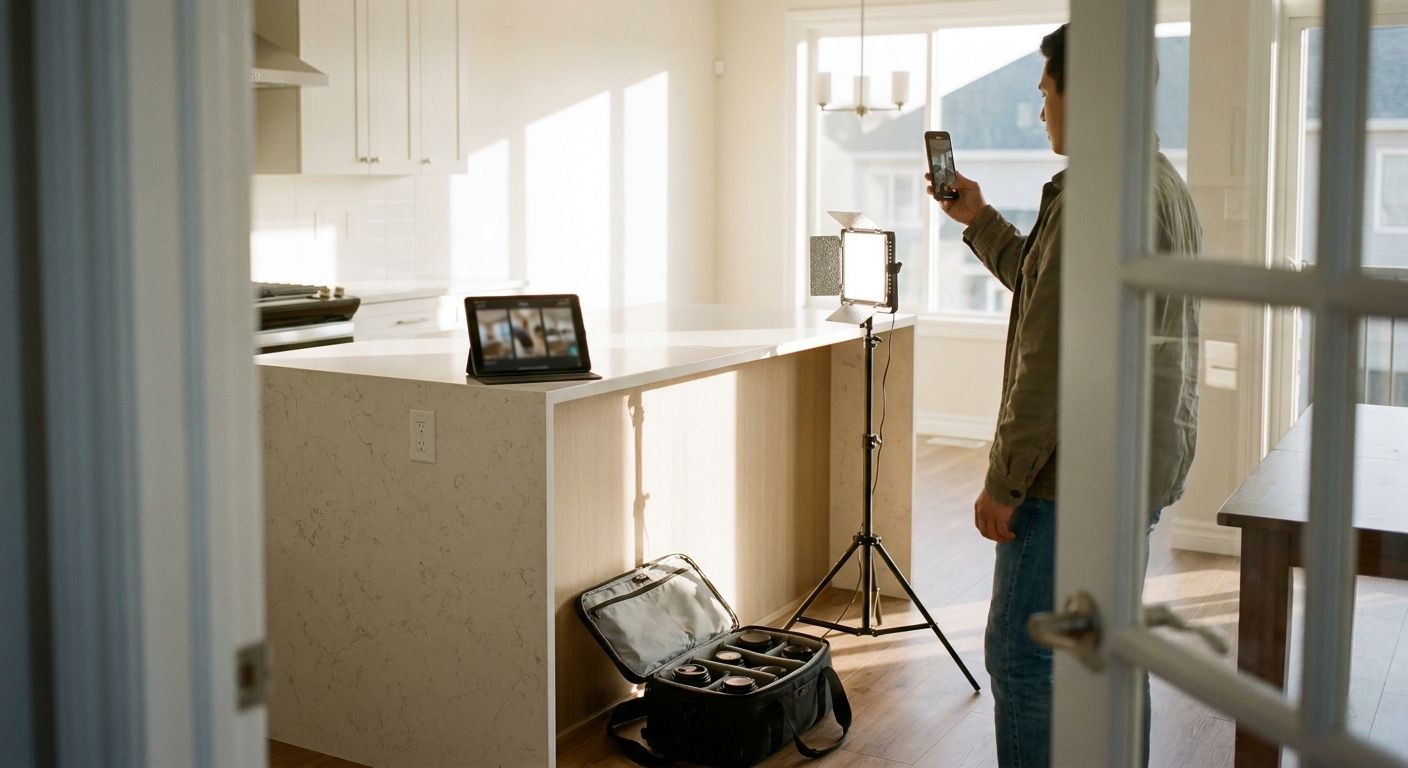
- Record the full walkthrough or explainer -- unedited, at least 5-8 minutes of raw footage and narration.
- Extract the counter-intuitive moment -- the one thing that surprised even you. That becomes a standalone short with hook #5 or #7 above.
- Pull the comparison clip -- if you toured multiple properties, cut the side-by-side segment and reframe it with hook #6.
- Isolate the advice moment -- the "here's what I'd tell a buyer" segment becomes its own post using hook #3 or #9.
- Reframe the same footage for a different audience -- a seller version, an investor version, a first-time buyer version, each with a different hook line at the top.
An AI agent running on GEN can track the pattern across all five variations -- which hook angle pulled the most replays, which audience segment engaged longest -- and use that signal to write the next round of scripts before you've finished editing. The loop closes faster than any manual testing cycle.
Frequently asked questions
How long should the hook itself be?
Three seconds on video, one sentence in a caption. The hook is not the intro -- it's the first word or visual that decides whether the viewer stays. Anything longer than a single punchy statement is already a body paragraph.
Should I use the same hook template repeatedly?
Rotate at minimum every three posts. Audiences pattern-match fast; the same opening structure starts to feel like a template, which undercuts the authentic signal you're trying to create. Run two or three templates in parallel and let engagement tell you which to weight more heavily.
Do hooks work differently on short-form vs. long-form?
The principle is the same; the execution window is tighter on short-form. On a short-form video you have under three seconds before the swipe. On a long-form YouTube video you have closer to thirty seconds, but the hook still needs to name the exact viewer and outcome -- just with more room to build tension before the payoff.
What's the single biggest hook mistake real estate creators make?
Leading with credential instead of context. "As a licensed realtor with 10 years of experience..." tells the viewer about you. "This listing is priced wrong and here's how I know" tells the viewer about their problem. The second version earns the right to mention your experience later.
The bottom line: Pick two templates from the list above, film three variations each this week, and compare which hook angle earns the most watch-through -- not just the most views. That ratio tells you whether the hook is doing its actual job.