Paid Clipping Campaigns for Brands: The 30–100 Clip/Week Operating Model That Actually Holds Up

Paid clipping campaigns work when you buy distribution learning, not just cheap edits
Paid clipping campaigns help brands test dozens of short-form angles fast. They fail when the brand pays outside clippers for views but learns nothing about which hooks, formats, and accounts can grow owned distribution.
The clipping campaign loop that compounds
Start with long-form assets that contain emotional spikes, contrarian claims, useful demos, or clean story arcs.
Turn each moment into multiple platform-native edits with distinct hooks, captions, crops, and pacing.
Use owned or approved accounts so the brand keeps data, reputation, and audience equity.
Use the strongest clips to inform the next source recording, not just the next edit batch.
- Paid clippers -> fast surface area: useful when you need many creative bets across TikTok, Reels, Shorts, and X.
- Unmanaged bounties -> messy incentives: clippers chase views, not brand safety, qualified attention, or account equity.
- Manual clipping -> slow feedback loops: a 2-3 hour source video can take hours to review before editing even starts.
- Autonomous clipping -> owned learning: tools like GEN can ingest long-form video, isolate moments, package vertical edits, and publish through controlled accounts.
The real economics: CPM is not the whole cost
Most brand clipping programs look cheap because payouts often track views. A typical paid clipper bounty may sit around an estimated $0.50-$3.00 per 1,000 views, depending on niche, creator demand, clipper quality, exclusivity, and whether the brand pays for raw reach or approved posts.
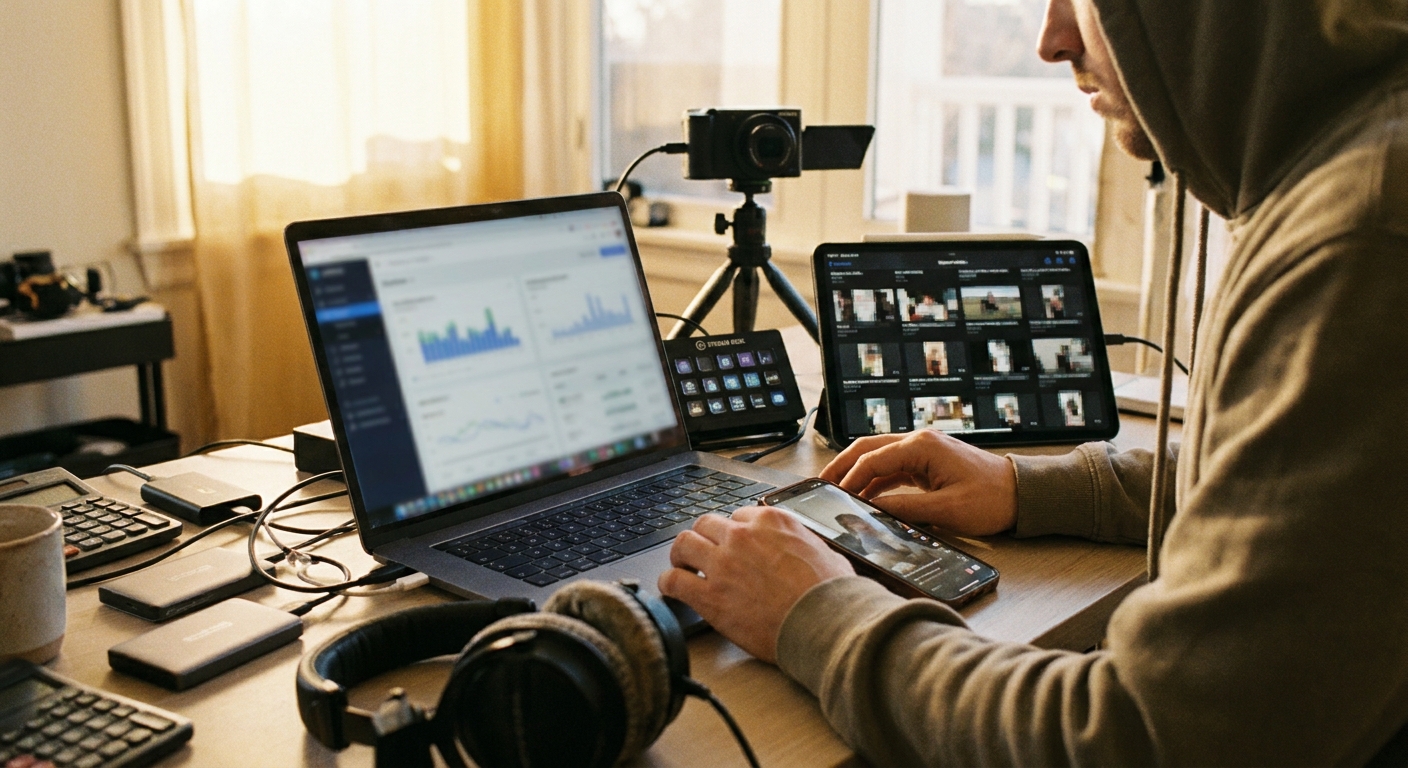
That range is only the visible line item. The hidden cost is campaign management: asset access, clip approvals, duplicate detection, payment verification, fraud review, takedown handling, rights questions, and reporting reconciliation.
The awkward truth: once a brand adds one operator to manage the chaos, the cheap CPM starts looking like a part-time distribution department.
| Cost layer | What operators usually underestimate |
|---|---|
| Clipper payout | Views are uneven; a small minority of clips often produces most of the campaign output. |
| Creative review | Brand teams still need to catch bad crops, misleading captions, and off-message edits. |
| Distribution control | External accounts may keep the audience, comments, signals, and long-term account value. |
| Fraud and duplication | View-bot risk, repost fights, reused watermarks, and duplicate uploads create cleanup work. |
Why streamer clipping scaled before brand clipping
Streamer and podcast clipping became a system before most brands paid attention because the source material was abundant and emotionally dense. A Twitch or Kick stream can run for hours, with argument, surprise, failure, humor, and social context baked in.
Creators like IShowSpeed and HasanAbi generate chaotic long-form source material that naturally cuts into short clips. Podcasts like The Joe Rogan Experience, Lex Fridman, and The Diary of a CEO produce a different version: long conversations with standalone claims, stories, and guest-led authority moments.
Brands usually have the opposite problem. Their long-form assets are over-controlled: webinars, founder interviews, launch videos, customer calls, keynote recordings. A clipper cannot manufacture tension if the source video has none.
The best clipping campaign is decided before editing starts. If the source recording has no tension, disagreement, proof, demo, or transformation, you are paying clippers to search for something that was never captured.
The power-law problem: most clips will not matter
In high-volume clipping, the distribution is harsh. A small slice of clips usually drives most views, whether the source is a streamer VOD, a podcast, or a brand interview.
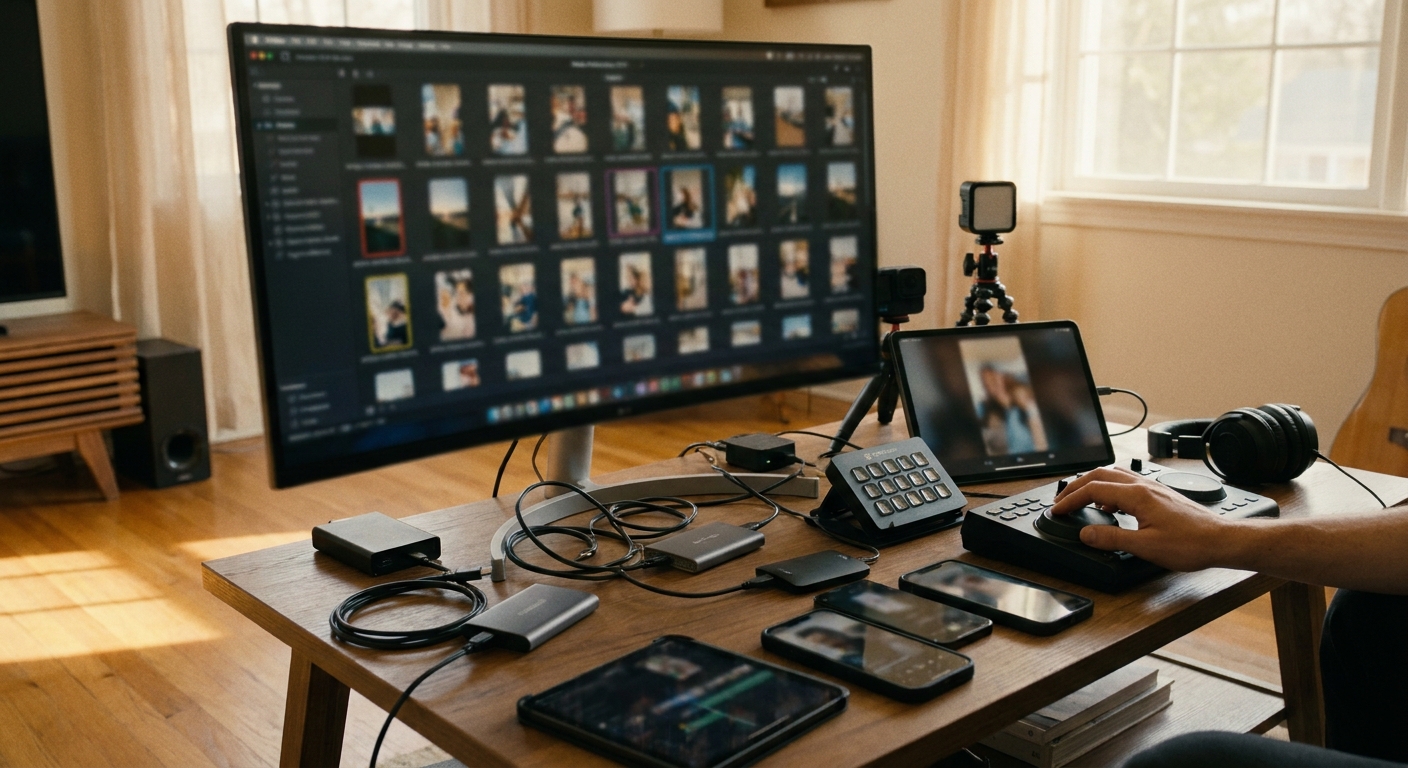
That is not a reason to avoid clipping. It is why volume, speed, and feedback discipline matter.
A brand posting five clips per month is not really testing short-form distribution. It is sampling noise. A brand publishing 30-100 clips per week can start to see which claims, faces, openings, and formats repeatedly earn retention.
The useful question is not "Which clip went viral?" The useful question is:
- Which source segments repeatedly produce clips worth posting?
- Which speakers create usable short-form moments without heavy editing?
- Which openings survive the first two seconds without over-explaining?
- Which topics produce qualified comments, not just passive views?
- Which platforms reward the format: TikTok, Reels, Shorts, or X?
Paid clipping campaigns vs autonomous clipping
Paid clipping campaigns are labor marketplaces. Autonomous clipping is an owned distribution loop. Both can work, but they solve different problems.
| Model | Best for | Main risk |
|---|---|---|
| Paid clipper bounty | Rapid external reach, creator-led communities, affiliate-style hype | Low control over brand safety, accounts, and learning capture |
| In-house editor team | Premium storytelling, executive content, high-touch launches | Slow throughput and expensive iteration |
| Autonomous AI clipping | Daily owned publishing from podcasts, webinars, streams, and recordings | Requires clear source strategy and brand templates |
GEN fits the third model. Instead of recruiting clippers, chasing submissions, and manually scheduling posts, a brand can run an autonomous workflow: ingest long-form video, detect strong moments, generate on-brand vertical edits, and publish through owned social channels.
That does not remove creative judgment. It moves judgment upstream: what to record, which moments to approve, what formats to systematize, and which accounts to build.
A practical workflow for brands running clipping in 2026
If you are considering paid clipping campaigns for brands, do not start with a bounty page. Start with the content supply.
- Audit source footage. Pull the last 10-20 long-form assets. Mark where a viewer gets a strong claim, useful proof, emotional reaction, or concrete demo within 10 seconds.
- Score clip density. If a one-hour recording has only one usable moment, the recording format is the bottleneck. Fix the interview, demo, or live format before scaling clippers.
- Define forbidden edits. Specify claims that require context, regulated language, competitor mentions, customer names, financial promises, and visual treatments that cannot ship.
- Create 3-5 repeatable templates. For example: founder POV, customer objection, product proof, teardown, and contrarian industry take.
- Choose account strategy. Decide whether clips publish from owned brand channels, executive channels, ambassador accounts, or external clipper accounts.
- Run a 30-day volume test. Publish enough variants to learn. The goal is not one breakout; it is identifying repeatable source-to-clip patterns.
- Feed winners back into production. If one objection clip works, record five deeper versions. If one speaker retains, put that person in more source content.
For teams building this into a recurring engine, see content automation workflows and how an AI social-media agent changes publishing cadence.
When a paid clipping campaign is the right move
Paid clippers are useful when the brand wants external creative chaos and can tolerate variance. They fit consumer brands, creator collaborations, personality-led launches, events, podcasts, entertainment, sports, and gaming-adjacent campaigns.
They are weaker when the brand has strict compliance, a narrow ICP, complex positioning, or a product that can be easily misrepresented in a 30-second edit.
- Use paid clippers when: you need fast reach, community remixing, or creator-native distribution.
- Use owned autonomous clipping when: you need controlled daily publishing, reliable brand voice, and accumulated account equity.
- Use both when: you have a major launch and want owned channels learning while external clippers expand surface area.
The operating metric that matters: usable clips per source hour
Most teams track views too early. Before that, track usable clips per source hour.
If a 90-minute webinar produces two clips, the webinar is not a clipping asset. If a 45-minute founder interview produces 15 credible shorts, you have a format worth repeating. If a product demo creates five different proof clips, the demo structure is doing distribution work before editing begins.
This metric forces the right conversation. Not "Should we hire more editors?" but "Which source formats create the most publishable moments per hour recorded?"
GEN's autonomous workflow follows that loop: source video in, moments detected, vertical outputs generated, posts scheduled, performance fed back into the next batch. The gain is not just faster editing. It is a shorter path from recording to publishing to learning.
Frequently asked questions
What are paid clipping campaigns for brands?
They are programs where brands pay independent clippers, editors, or creator-distribution partners to cut short-form clips from approved source material and publish or submit them for payout. Payment may be based on views, approved clips, flat fees, or hybrid bounty structures.
How much should a brand pay clippers?
Many campaigns use view-based payouts, often estimated around $0.50-$3.00 per 1,000 views, but the right structure depends on niche, quality bar, platform, rights, and review burden. A higher fixed fee can be cheaper if it reduces fraud, cleanup, and low-quality submissions.
Should clips be posted on brand-owned accounts or clipper accounts?
Use brand-owned accounts when long-term audience equity, pixel-like learning, comment quality, and brand safety matter. Use clipper accounts when the main objective is broad external reach and you are comfortable with less control.
Can AI replace paid clippers completely?
Not always. AI is strongest for repeatable clipping, formatting, captioning, scheduling, and owned publishing. Human clippers can still add value when cultural timing, niche humor, community context, or aggressive remixing matters. The best system often uses AI for the baseline engine and humans for exceptional creative bets.
The takeaway
Paid clipping campaigns for brands are not a cheap-editing hack. They are a distribution experiment with operational debt. If you want reach without control, run a bounty. If you want a compounding short-form engine, build an owned clipping loop where every source hour teaches the next one.