Top 10 Hooks to Try for Acne Content (With Templates)

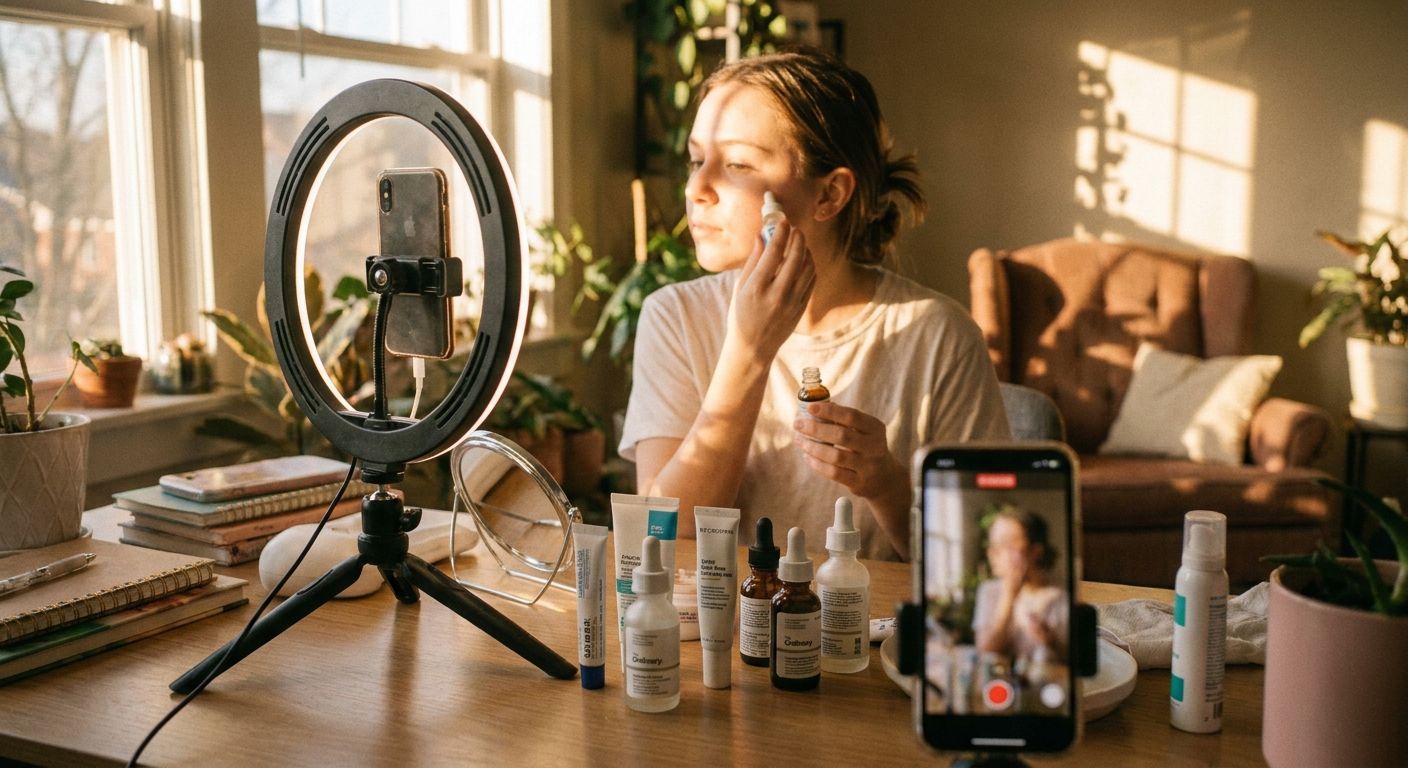
The right hook decides everything before the first second ends
Acne content is one of the most crowded skincare niches. Strong hooks stop the scroll, pre-qualify your viewer, set up the payoff, and make saves feel mandatory. The 10 templates below come from patterns in high-performing acne posts, with the weak version of each hook named so you can cut it fast.
How a strong acne hook converts to saves
Hook contradicts a belief the viewer already holds about acne—forces a double-take in the first 1–2 seconds.
Camera shows skin, product, or process immediately—viewer has visual evidence the payoff is real before the explanation starts.
The answer is withheld just long enough—viewer needs to watch to resolve the open loop, driving completion rate.
Delivers a specific, actionable answer—product name, ingredient, step—that makes saving feel more useful than sharing.
Winners vs. losers at a glance
- Winner: opens on skin or product, states the outcome in the first breath, sounds like a real person who has lived the problem
- Winner: makes the viewer feel seen ("if you have hormonal acne") before pitching anything
- Winner: withholds one key detail just long enough to earn the watch
- Loser: opens with "hi guys, today I'm going to talk about..."
- Loser: leads with a discount or affiliate code before establishing credibility
- Loser: buries the result at the end with no payoff signaled upfront
- Loser: text-only slides with no face, skin, or product visible
10 hook templates for acne creators
1. The contrarian swap
Template: "Stop using [common fix] for acne. Use [unexpected alternative] instead."
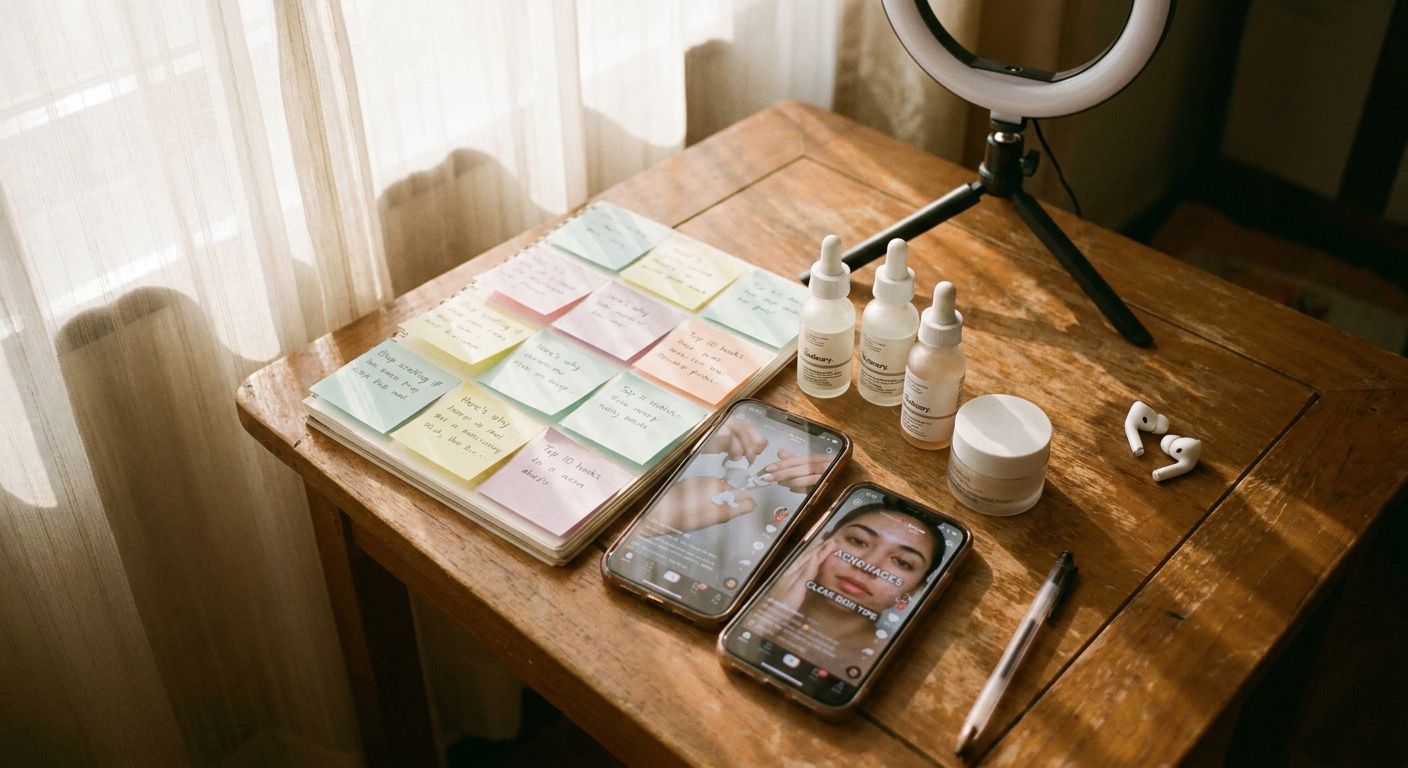
Why it works: It challenges an entrenched belief. The viewer either disagrees (stays to argue) or is curious (stays to learn). @thedcnp runs this pattern effectively, swapping antibiotics for antihistamines in a post that drove exceptional saves relative to views.
Loser pattern avoided: "Here are some things that help with acne" -- no tension, no reason to stay.
2. The specificity promise
Template: "How to clear [very specific acne type] in [specific timeframe]."
Why it works: Closed comedones, hormonal chin acne, and back acne each have distinct audiences. Precision beats "acne tips." @milkydew's closed-comedones framing consistently outperforms generic "skincare tips" accounts because the viewer self-identifies immediately.
Loser pattern avoided: "Tips for clearer skin" -- zero self-identification, zero urgency.
3. The rating frame
Template: "Rating [5-10 popular acne treatments] so you don't waste money."
Why it works: A numbered list creates an implicit contract -- the viewer waits for the score they care about. @draleksandrabrown's dermatologist-rates format works this way. The "so you don't waste money" rider adds stakes.
Loser pattern avoided: A haul video with no editorial angle -- just showing products doesn't earn the watch.
4. The confession open
Template: "I had [acne type] for [X years] and this is the only thing that actually worked."
Why it works: First-person lived experience is harder to scroll past than third-person advice. The implied promise: I already did the trial-and-error so you don't have to.
Loser pattern avoided: "This product is great for acne" -- no stakes, no story, no credibility.
5. The mistake reveal
Template: "The [common habit/product] that was making my acne worse -- not better."
Why it works: Viewers scan for themselves in the mistake. The share rate is high because people send it to friends making the same error.
Loser pattern avoided: Pure "what I use" content with no contrast or tension.
6. The ingredient deep-dive
Template: "Nobody talks about [ingredient] for acne but it changed my skin."
Why it works: "Nobody talks about" positions the creator as an insider. Works especially well for ingredients like azelaic acid or tranexamic acid that aren't yet household names.
Loser pattern avoided: Recommending retinol or salicylic acid with no new angle -- the viewer has seen it a hundred times.
7. The audience mirror
Template: "If you have [hormonal / cystic / stress-triggered] acne, watch this."
Why it works: Direct address creates instant self-selection. The viewer who identifies stops scrolling because the content feels made for them. Works best camera-to-lens, direct eye contact.
Loser pattern avoided: "Acne tips for everyone" -- broadcasting to no one in particular.
8. The process reveal
Template: "My dermatologist's actual step-by-step routine for [acne type]."
Why it works: "Actual" and "step-by-step" both signal specificity and access. Borrowed authority (dermatologist, esthetician, pharmacist) raises the perceived reliability of the information.
Loser pattern avoided: Vague "my skincare routine" content that doesn't specify what problem it solves.
9. The before-state anchor
Template: "My skin looked like this [show close-up]. Here's exactly what I changed."
Why it works: Opening on the problem state means the viewer empathizes before any product is mentioned. A tight close-up of skin (with or without makeup) consistently outperforms a beauty-lit hero shot as an open.
Loser pattern avoided: Leading with the after. Starting perfect-looking removes the tension that makes the video watchable.
10. The counter-intuitive warning
Template: "This popular acne advice is actually making breakouts worse -- here's why."
Why it works: Warning hooks trigger a protective instinct. The viewer slows down because they don't want to be the person doing the harmful thing. Works well for creators with clinical or expert positioning.
Loser pattern avoided: "Here are things to avoid" lists with no specificity about why something is harmful.
One source video -> 3-5 posts: a fast workflow
- Pick one insight -- e.g., "antihistamines reducing hormonal acne breakouts." One video, one idea.
- Write hook variants -- apply Hook 1 (Contrarian Swap), Hook 5 (Mistake Reveal), and Hook 7 (Audience Mirror) to the same core insight. Three different opens, same body content.
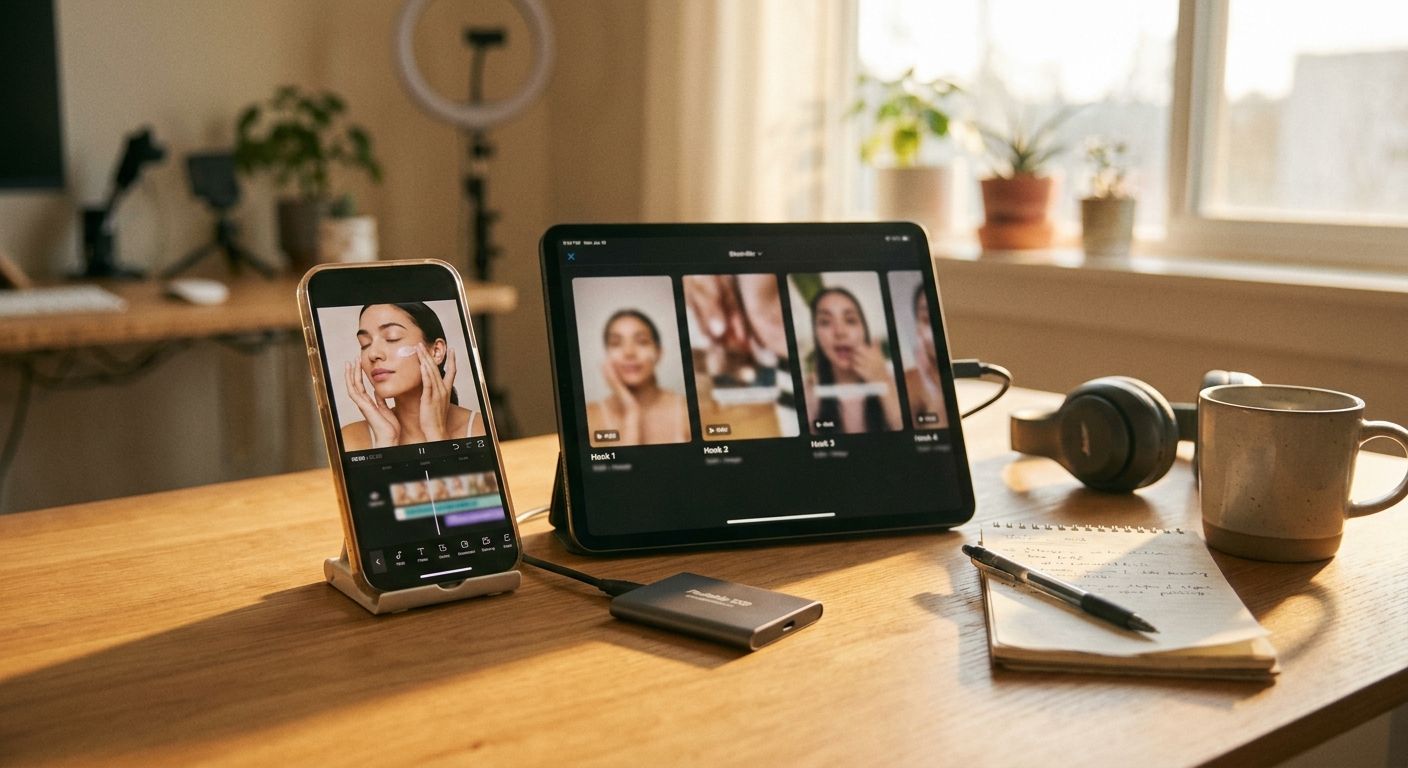
- Swap the format -- direct-to-camera close-up, product flat-lay with voiceover, a two-slide before/after. Same script, different visual treatment.
- Adjust the angle per platform -- the contrarian hook runs as a short-form video; the ingredient deep-dive becomes a carousel; the warning hook becomes a single-image post with a strong caption.
- Test and rotate -- an agent like GEN can watch which hook variant gains traction fastest and queue the next variation automatically, so you're not manually tracking which open worked.
Frequently asked questions
How long should an acne hook actually be?
The hook is the first 1-3 seconds of spoken audio and the first visual frame. If the viewer hasn't understood what the video is about by second three, they're gone. Shorter is almost always better -- cut every word that doesn't add to the open loop.
Should I show my real skin unfiltered in acne content?
Yes, and it's a competitive advantage. Tight, unfiltered close-ups of skin (before-state especially) consistently outperform beauty-lit, filtered intros in this niche because they signal authenticity immediately. Filters erode the exact credibility that makes acne content shareable.
Can I use the same hook template repeatedly?
Yes -- but rotate the angle. Using Hook 2 (Specificity Promise) every week is fine as long as the specific acne type and outcome changes each time. What kills performance is the exact same sentence appearing twice in a viewer's feed.
Do hooks work differently for credentialed creators vs. regular creators?
Credentialed creators (dermatologists, NPs) get more mileage from authority hooks like Process Reveal and Counter-Intuitive Warning. Non-credentialed creators get more lift from Confession Open and Before-State Anchor, where lived experience is the credibility signal. Both can use the Contrarian Swap effectively.
Start here: Pick one hook from this list, write three sentence variations of it, film the one that feels most natural on camera. The goal isn't a perfect hook -- it's a hook that gets tested this week instead of next month.