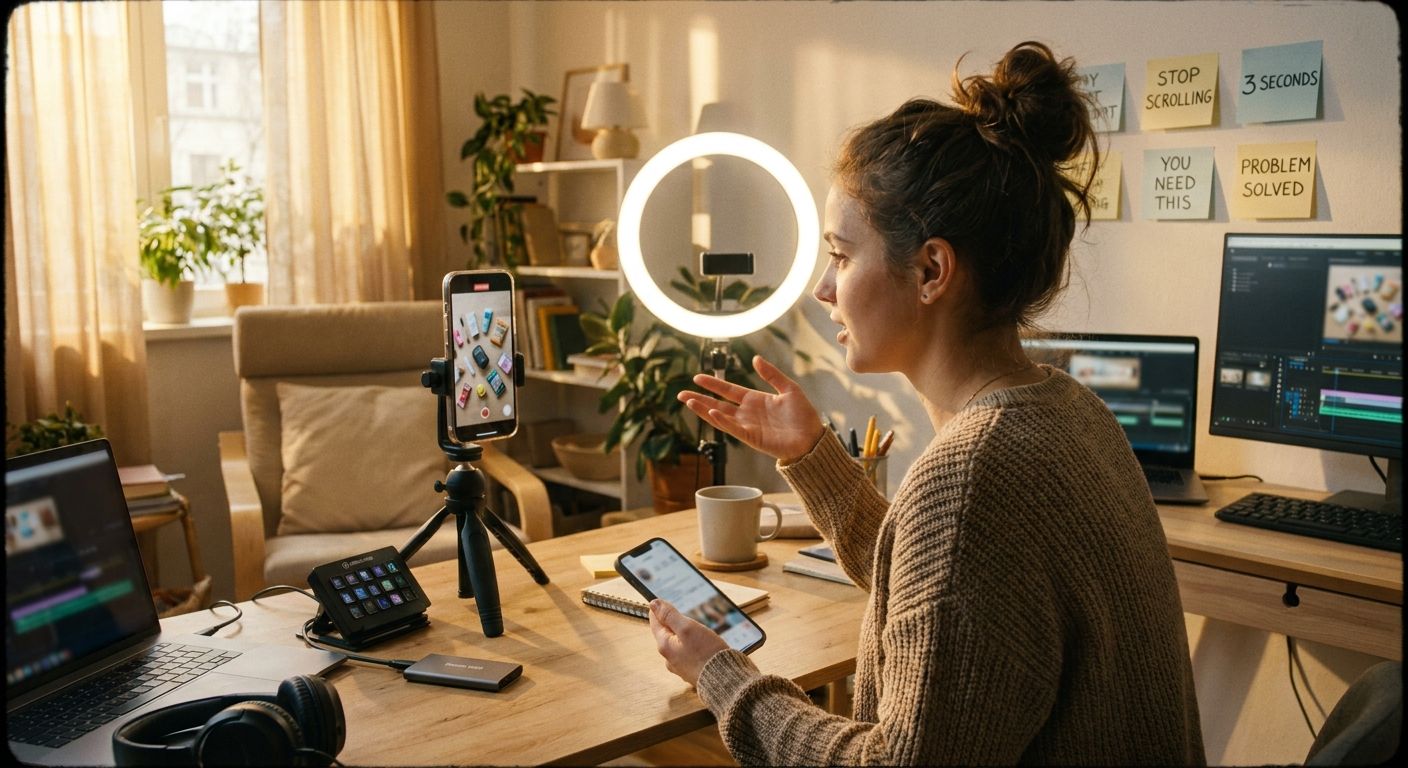
Top 10 Hooks to Try for Biohacking Content (That Actually Stop the Scroll)


The biohacking hook problem: your first 2 seconds are doing too much lifting
Biohacking content lives or dies on its hook. The niche is credibility-sensitive--viewers are deciding in under two seconds whether the person on screen knows something they don't, or whether this is another vague wellness reel. Getting that decision right is the entire game.
How a strong biohacking hook converts
A visual or verbal cue that says "I've done this, not just read about it"--lab result on screen, needle in frame, protocol timer running.
State the specific result the viewer will understand by the end--not "biohacking tips," but "why my inflammation markers dropped after cutting this one thing."
Something unexpected--a counterintuitive claim, a visible result, or a "most people are wrong about X"--that forces the viewer to keep watching to resolve the tension.
A micro-tease that makes stopping feel like a loss--"I'll show the bloodwork at the end" or "the part most people skip is coming up."
Winners vs. losers in biohacking content
- Winner: Opens on the result or the process in progress -- viewer immediately understands what they're learning
- Winner: Specific protocol, compound, or device named in the first sentence -- signals real knowledge
- Winner: Direct-to-camera while demonstrating -- credibility and intimacy at the same time
- Winner: Genuine curiosity or enthusiasm that reads as personal obsession, not sponsored content
- Loser: Generic opener ("biohacking is amazing and here's why") -- no reason to stay
- Loser: Hiding the payoff until a CTA -- viewers leave before the ask
- Loser: Text-only slides with no presence -- low trust in a credibility-sensitive niche
- Loser: Leading with a discount or affiliate code -- signals promotion before value
Creators like @capital.chia use the adaptable-opening-premise pattern well: drop the viewer into a personal experiment mid-sentence, name the specific compound or protocol, and let curiosity do the work. That pattern drives strong save rates because viewers bookmark it to come back to.
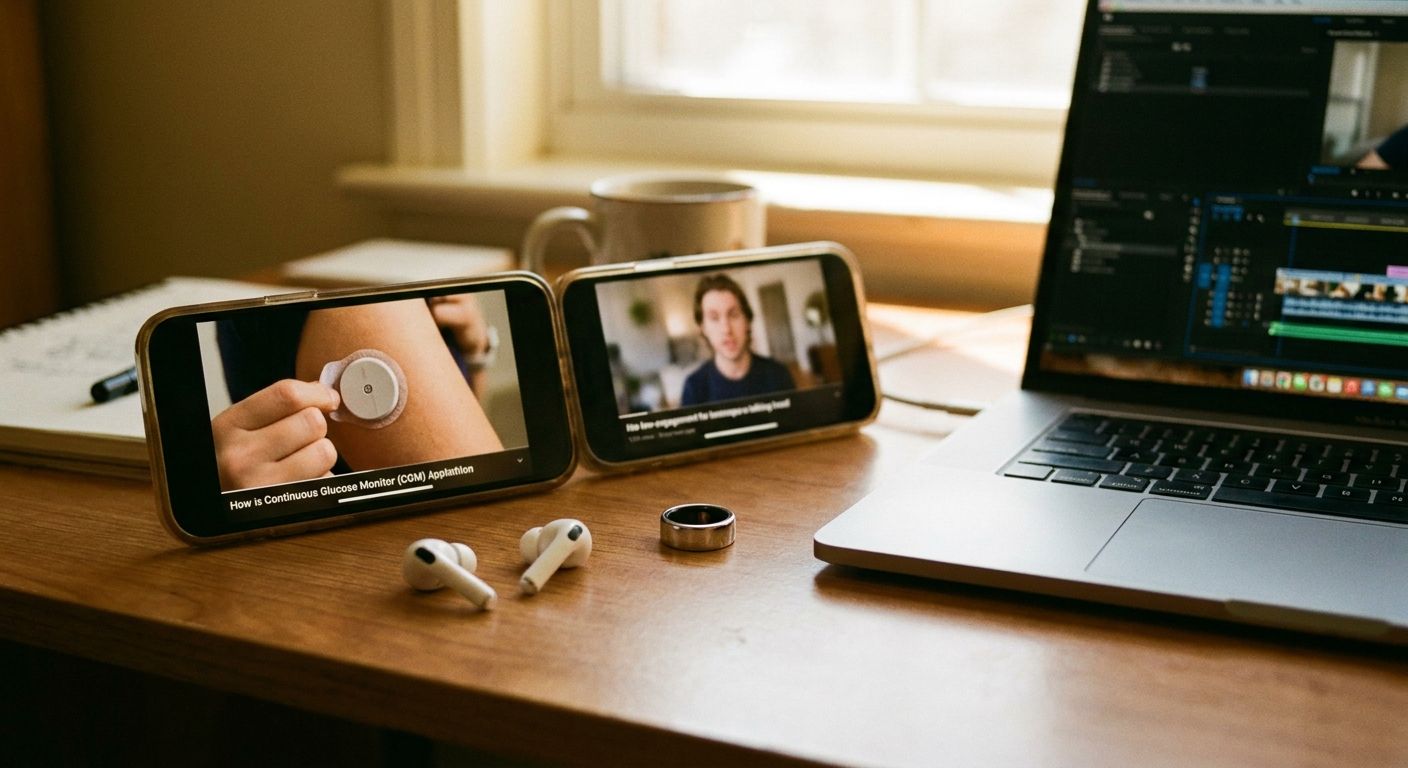
10 hooks to try for biohacking content
1. The mid-experiment drop
Template: "I'm [X days / X weeks] into [specific protocol] and something unexpected is happening."

Why it works: Places the viewer inside an ongoing story. They need to watch to find out the result.
Adapt it: Pair with visible proof--timer, tracker screenshot, vial on screen.
Loser pattern it avoids: Starting with background context no one asked for.
2. The counterintuitive claim
Template: "Everyone in biohacking talks about [X], but it actually [does the opposite / isn't the bottleneck]."
Why it works: Triggers cognitive dissonance. The viewer has to resolve the contradiction.
Adapt it: Pick a genuinely contested claim (cold plunge timing, fasting windows, supplement stacking order) where you have a real position.
Loser pattern it avoids: Agreeing with the consensus and adding nothing new.
3. The how-to promise with a specific payoff
Template: "How to [do the exact process] correctly--most people miss step [X]."
Why it works: Combines a clear deliverable with the implication that the viewer is currently doing it wrong. Both are motivating.
Adapt it: Demo the process on camera. @iepeps uses this pattern effectively for technique-based content--the how-to promise works when the demonstration is visible and tight.
Loser pattern it avoids: Vague "tips" framing with no specific process shown.
4. The before/after reveal teaser
Template: "This is what [biomarker / body composition / sleep score] looked like before I started [protocol]. Here's after [X weeks]."
Why it works: Shows, doesn't tell. Biohacking is data-driven; visible results beat claims.
Adapt it: Show the actual data--a wearable screenshot, a blood panel photo, a side-by-side. The more specific the metric, the stronger the hook.
Loser pattern it avoids: Describing results verbally without any evidence.
5. The unpopular opinion
Template: "Hot take: [commonly recommended biohack] is a waste of time if you haven't fixed [upstream variable] first."
Why it works: Disagreement generates comments. In a niche with strong opinions, pushback is distribution.
Adapt it: Have a defensible position ready. The hook earns attention; the argument earns saves and follows.
Loser pattern it avoids: Hedged, balanced takes that generate no reaction.
6. The "I tested it so you don't have to" frame
Template: "I spent [X weeks] testing [specific protocol / stack] on myself. Here's the honest breakdown."
Why it works: Positions you as the experiment, which is inherently personal and hard to replicate elsewhere. First-hand data is the scarcest thing in the niche.
Adapt it: Include what didn't work. Failure data is more trustworthy than pure success claims.
Loser pattern it avoids: Reviewing something without having tried it.
7. The cost/effort reveal
Template: "This biohack costs [almost nothing / under $X / just [time]] and the mechanism is actually well understood."
Why it works: Biohacking has a reputation for expensive protocols. Accessibility angles cut through because they reframe the barrier.
Adapt it: Works especially well for breathwork, light exposure, cold exposure, or sleep timing--high-signal, low-cost interventions.
Loser pattern it avoids: Leading with an expensive supplement or device that immediately loses non-buyers.
8. The mechanism explainer
Template: "Most people take [X] without understanding what it's actually doing to [specific pathway / receptor / system]. Here's the real mechanism."
Why it works: The biohacking audience skews intellectually curious. Mechanism content drives saves because viewers want to reference it later.
Adapt it: Keep the science accurate and specific. Vague mechanism claims ("boosts mitochondria") are weaker than a named pathway.
Loser pattern it avoids: Benefit claims without any "why."
9. The stack comparison
Template: "[Protocol A] vs. [Protocol B]--I ran both for [X weeks] and the difference in [specific metric] surprised me."
Why it works: Comparison content is inherently watchable because it has a built-in conclusion the viewer wants to reach.
Adapt it: Make the comparison specific. "Morning vs. evening cold plunge on HRV" beats "cold therapy comparison."
Loser pattern it avoids: Standalone protocol reviews with no reference point.
10. The mistake confession
Template: "I did [common biohack] wrong for [X months] and it was making things worse. Here's what I missed."
Why it works: Vulnerability in a credibility-driven niche signals honesty. It also triggers fear-of-missing-out: the viewer wonders if they're making the same mistake.
Adapt it: Be specific about what the mistake actually was--vague "I was doing it wrong" without a named error reads as clickbait.
Loser pattern it avoids: Presenting yourself as always correct, which reads as promotional.
Workflow: turn one source video into 3-5 posts
- Identify the core mechanism in the source video--the single claim or process that's actually interesting. Strip everything else.
- Write a hook variation for each angle: one counterintuitive, one how-to, one mistake confession. Three angles = three posts from one idea.
- Reformat the visual layer: one direct-to-camera demo, one data/result reveal (screenshot or graphic), one reaction or commentary over the original concept.
- Test the opening sentence in isolation before you film--if it doesn't create a question in the reader's mind, rewrite it.
- Schedule variants 48-72 hours apart so the algorithm treats them as separate pieces of content, not duplicates.
An agent like GEN can automate steps 2-5: it monitors which hook pattern is gaining traction in the biohacking niche in real time, generates script variants from a single source video, and queues the schedule automatically--so you're testing five hooks in the time it normally takes to shoot one.
Frequently asked questions
How long should a biohacking hook actually be?
Under three seconds for the verbal hook; under five for the visual setup. If you haven't created a reason to stay by second five, the viewer has already decided. Biohacking is competitive enough that every wasted second is measurable drop-off.
Should I explain the science in the hook itself?
No. The hook's job is to create a question, not answer one. Tease the mechanism ("the part most people get wrong about [X]"), then deliver the explanation in the body. Front-loading science kills retention before the payoff lands.
Which of these hooks drives the most saves?
Mechanism explainers and how-to processes consistently generate strong save behavior in the biohacking niche--viewers treat them as reference material. Counterintuitive claims tend to drive comments and shares instead. Run both; they serve different distribution functions.
Can I reuse the same hook template across multiple posts?
Yes, but vary the specific claim and the visual treatment each time. The template is the structure; the hook is the specific surprising thing you're saying. Audiences don't burn out on a format--they burn out on the same claim repeated.
The one thing to fix first: audit your last ten posts and identify which ones had a specific, named outcome in the first sentence and which were generic setups. The gap between those two groups is your hook problem--and it's faster to fix than any other content variable.