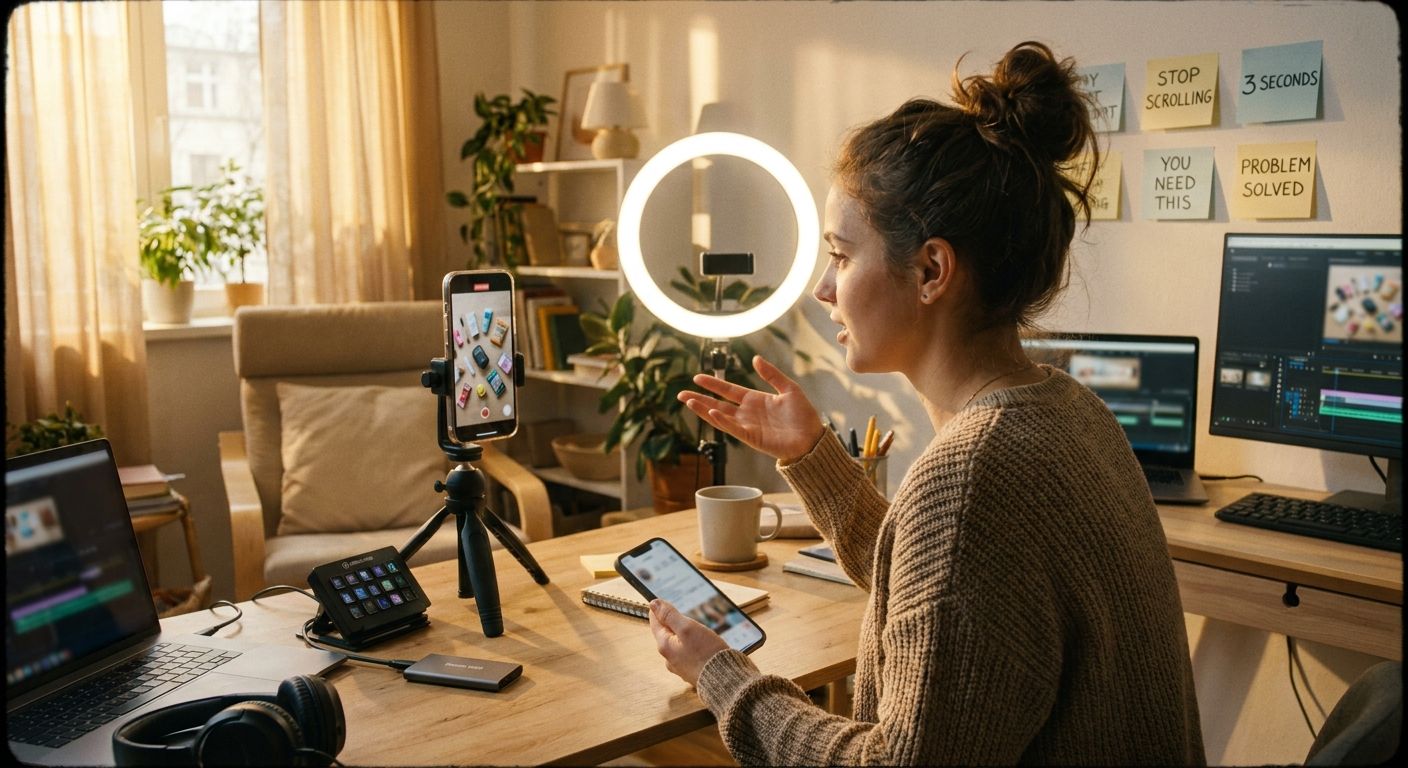
Top 10 Hooks to Try for Credit Card Content (With Templates)


Most credit card hooks die in the first two seconds -- here's what works instead
The credit card niche is crowded with creators posting the same "best cashback card" roundup in the same flat talking-head format. The accounts breaking through -- like @marisaalsharif and @onechartaday -- aren't winning with better hashtags or longer videos. They open with a hook that makes the viewer feel the stakes or see the payoff immediately. The ten templates below are drawn from what's actually working in this niche right now.
Why most credit card hooks fail (and what fixes them)
Leading with "today I'm going to talk about credit cards" gives the viewer zero reason to stay. The algorithm punishes fast drop-off.
A strong hook names the specific outcome (approval, points, debt-free) or the specific mistake -- before any setup.
The promise made in the hook is fulfilled quickly and specifically. Payoff delayed more than 30 seconds collapses retention.
Rotate hook formats systematically. A tool like GEN can spot which hook pattern is pulling retention and generate script variants automatically.
Winners vs. losers in credit card content
- Winners: name a specific card, mistake, or dollar outcome in the first line; show the card, app screen, or statement on camera; sound genuinely excited or mildly outraged; give the viewer an action before the video ends.
- Losers: open with "so today I want to talk about..."; hide the payoff behind a long intro; lead with a generic CTA ("link in bio for my top picks"); treat hashtag count as the growth lever.
- Format that works: direct-to-camera while demonstrating the card or app, tight shots of the physical card or screen, before/after framing (score before vs. after a strategy).
- Format that underperforms: text-only slides with no voice or face; green-screen backgrounds with no real product visible; generic stock imagery of wallets.
10 hooks to try for credit card content
1. The painful mistake opener
Template: "I made a [specific mistake] with my credit card and it cost me [concrete consequence]."

Why it works: Loss aversion stops scrolls faster than aspiration. The viewer immediately checks whether they've made the same mistake.
Adapt it: "I paid my credit card on the wrong date for a year -- here's what that actually did to my score."
Loser pattern it avoids: Opening with "credit card tips you need to know" -- zero stakes, zero reason to stay.
2. The counterintuitive truth
Template: "Paying off your credit card in full every month isn't always the best move -- here's why."
Why it works: It violates a widely-held belief and forces the viewer to reconcile the contradiction.
Adapt it: Challenge any conventional wisdom in the niche -- approval timing, utilization myths, credit limit requests.
Loser pattern it avoids: Restating advice the viewer already knows ("always pay on time").
3. The specific approval secret
Template: "Here's the exact reason most people get denied for [specific card] -- and how to fix it before you apply."
Why it works: Seen consistently in strong-performing content from creators like @nhungcauhoi.tralo -- naming the specific card (e.g., Amex Platinum) pulls in a highly motivated audience already mid-decision.
Adapt it: Use for any premium or hard-to-get card. The specificity is the hook.
Loser pattern it avoids: "Tips for getting approved for a credit card" -- no card named, no stakes.
4. The community solidarity opener
Template: "Let's help each other [feel/figure out/fix] [shared credit card problem]."
Why it works: @marisaalsharif used a version of this framing to generate one of the highest comment and share volumes in the niche recently. It signals community, not lecture -- viewers comment rather than scroll.
Adapt it: Works especially well for debt payoff content where shame is a real barrier.
Loser pattern it avoids: A lecturing tone that positions the creator as expert and the viewer as student.
5. The how-to with a mechanism
Template: "How to [specific outcome] -- the part nobody tells you."
Why it works: @onechartaday runs this pattern consistently. "The part nobody tells you" signals insider knowledge, not recycled advice.
Adapt it: "How to pay your credit card to actually maximize your score -- not just avoid late fees."
Loser pattern it avoids: "How to use a credit card responsibly" -- sounds like a bank brochure.
6. The before/after reveal
Template: "My credit score was [low number] six months ago. Here's exactly what I changed."
Why it works: Before/after is the strongest retention format in finance content. The viewer wants the middle -- they'll watch to get it.
Adapt it: Swap score for debt balance, card tier, or credit limit -- any visible transformation works.
Loser pattern it avoids: Stating tips without any personal stakes in the outcome.
7. The "if you do X, stop" pattern
Template: "If you're [common credit card behavior], stop -- you're leaving [specific benefit] on the table."
Why it works: Negative command plus lost opportunity -- two psychological triggers in one line.
Adapt it: "If you're paying the minimum every month, stop -- here's what it's actually costing you."
Loser pattern it avoids: Framing advice as optional ("you might want to consider...").
8. The comparison setup
Template: "[Card A] vs. [Card B] -- I tested both for [time period] and here's the honest answer."
Why it works: Viewers in purchase-decision mode actively search comparison content. "Honest answer" signals you'll cut through affiliate spin.
Adapt it: Works across cashback vs. travel, no-fee vs. annual-fee, beginner vs. premium card comparisons.
Loser pattern it avoids: Listing card features without a clear verdict.
9. The "I wish I knew" reframe
Template: "I wish someone had told me [specific credit card insight] before I [specific life event]."
Why it works: Triggers regret and vicarious learning at the same time. The viewer mentally inserts their own life event.
Adapt it: "I wish someone had told me how credit utilization actually works before I applied for a mortgage."
Loser pattern it avoids: Generic "things I learned about credit cards" framing with no emotional anchor.
10. The myth-bust with proof
Template: "You've been told [common credit myth]. Here's what actually happens."
Why it works: Viewers share myth-busts because they want to pass the correction on. It also positions you as the corrective voice rather than one more person repeating the same advice.
Adapt it: "You've been told checking your own credit hurts your score. Here's what actually happens when you pull it."
Loser pattern it avoids: Stating correct information without addressing the wrong belief first.
Workflow: one source video -> 3-5 original posts
- Identify the core mechanism. Strip one source video down to its single useful insight (e.g., "paying before the statement close date, not the due date, lowers reported utilization").
- Assign a hook format to each derivative. Take hooks 2, 5, and 7 above and write one script opening per hook around that same mechanism.
- Change the proof type per post. Post 1 uses personal story; Post 2 uses a chart or app screenshot; Post 3 uses a direct-to-camera explainer with the physical card visible.
- Vary the audience angle. One post targets people rebuilding credit; one targets people optimizing for a mortgage application; one targets beginners opening their first card.
- Run the variation, read the retention drop-off. The hook with the flattest retention curve is your next template to scale. A tool like GEN can automate this loop -- pattern-spotting across your posts, generating hook variations, and scheduling tests without manual reformatting between platforms.
Frequently asked questions
How long should a credit card hook actually be?
The hook is everything the viewer hears before they decide whether to keep watching -- typically the first five to eight seconds of spoken content. It's one sentence or two that delivers a specific tension or promise, not a structural element you pad out. Shorter is almost always better.
Do I need to show my actual card or score on camera?
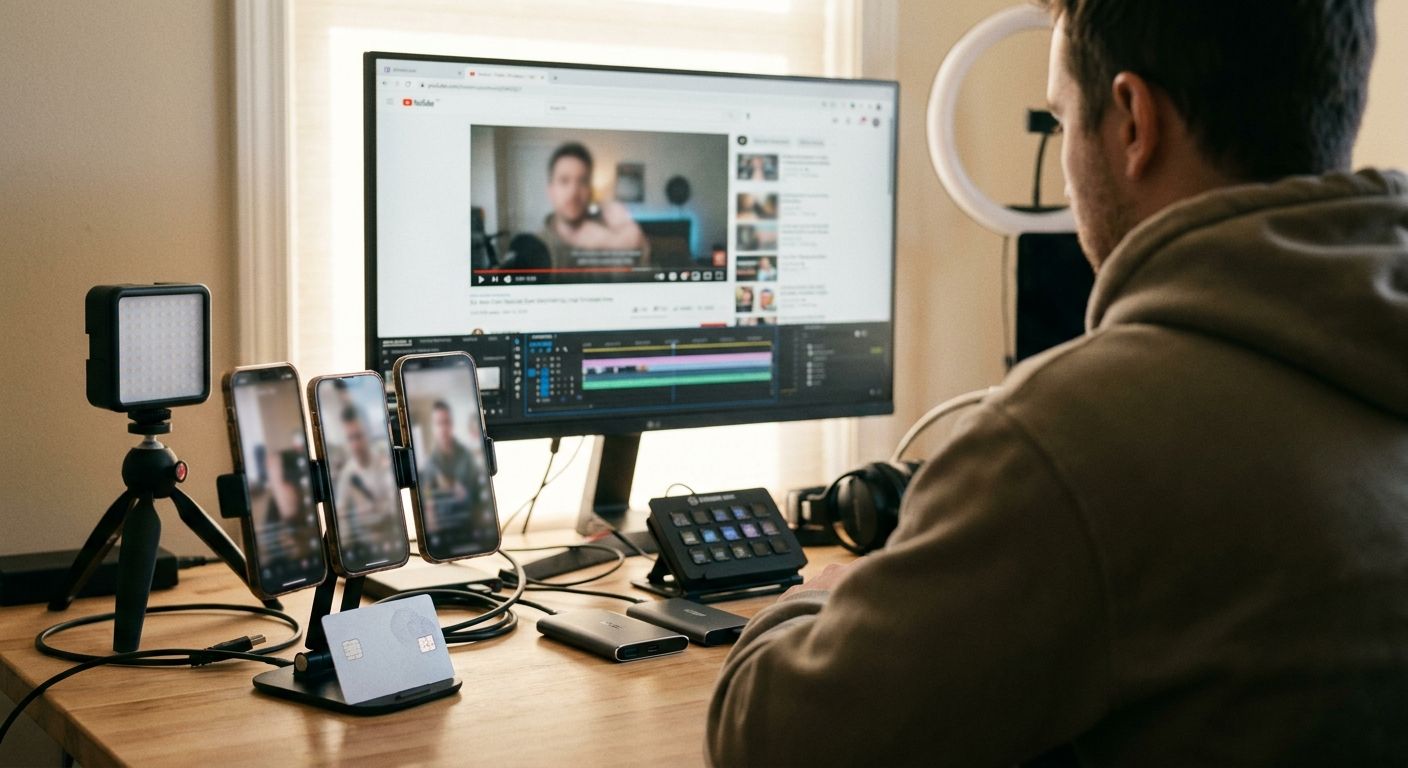
Not necessarily, but a real physical card, a real app screen, or a real statement creates credibility that text-only content can't replicate. If privacy is a concern, use a card mock-up or blur specific numbers -- but keep something real and tangible on screen.
Which of these hooks works best for affiliate-linked content?
Hooks 3 (approval secret), 8 (comparison), and 5 (how-to with mechanism) tend to attract viewers already close to a decision. That intent-match makes them stronger for affiliate conversion than awareness-stage hooks like 4 or 9.
How often should I rotate hook formats?
Rotate with purpose, not at random. Run a single hook format for three to five posts, then compare which one held attention longest. Only switch when you have a clear underperformer, not just out of creative boredom. Consistency in format also trains your audience to recognize your content pattern.
Takeaway: The credit card niche rewards specificity above everything else. A hook that names a real card, a real mistake, or a real score outcome will outperform a generic finance tip every time. Pick two hooks from this list, write three scripts each, and test them this week -- then let performance, not intuition, tell you which template to scale.