Seedance vs Kling: The 2-Model Workflow for 30-Second AI Ads

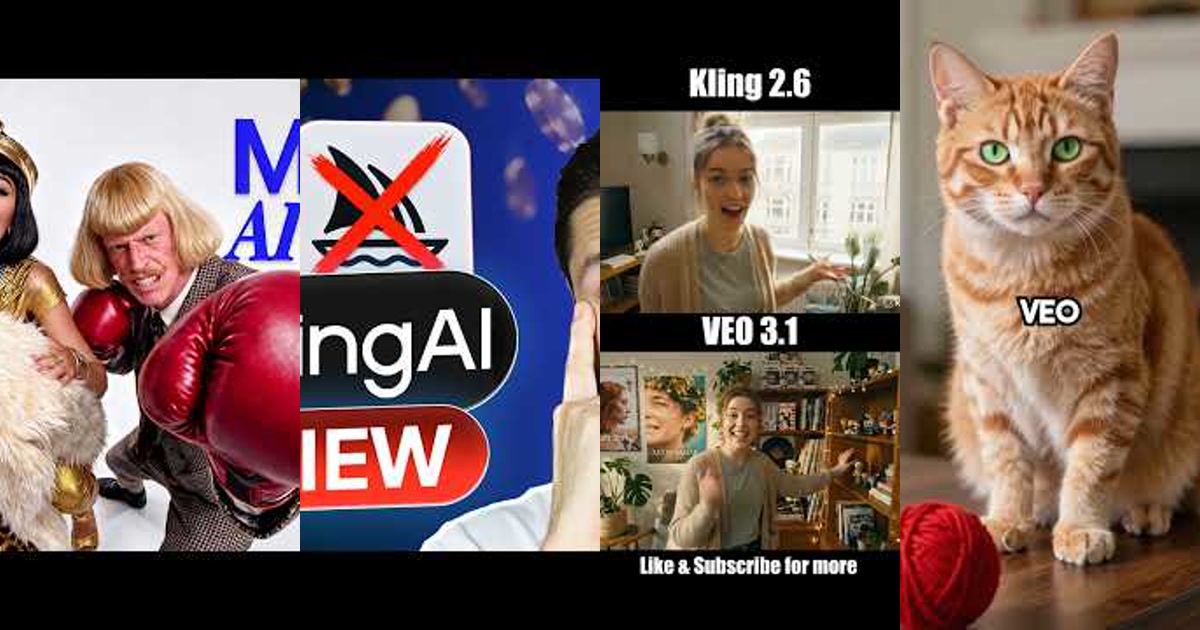
Verdict: Seedance 2.5 is the better model when the same human face must hold across multiple shots. Kling 1.5/2.0 is the better model when the camera, body, object, or environment needs cleaner physics. For ad production, the answer is not Seedance vs Kling. Use Seedance for character and dialogue beats, Kling for kinetic B-roll, and an orchestration layer like GEN Vidsheets to decide which shot goes where.
The dual-model ad loop
Break the 30-second ad into face, product, motion, proof, and CTA moments.
Use Seedance for UGC actors, micro-dialogue, lip-sync, and repeated protagonist shots.
Use Kling for camera moves, action inserts, product motion, environments, and transitions.
Cut on voiceover, gesture, screen direction, and color so the model boundary disappears.
- Pick Seedance when: the same actor appears in 5-10 shots, speaks to camera, or carries the trust layer of the ad.
- Pick Kling when: the shot needs a drone move, whip pan, vehicle acceleration, running sequence, explosion, or product-in-environment motion.
- Avoid the common failure: asking Kling to preserve a close-up face across a dialogue sequence, or asking Seedance to handle aggressive camera physics.
- Production rule: Seedance owns identity. Kling owns velocity. Editing makes both feel like one shoot.
Seedance vs Kling comparison table
| Capability | Seedance 2.5 | Kling 1.5/2.0 | Operator call |
|---|---|---|---|
| Face retention | Best use case. Better at preserving bone structure, hair volume, skin tone, and facial proportions across sequential shots. | Can look excellent in a single shot, but repeated close-ups drift more often when motion or camera changes get intense. | Use Seedance for recurring protagonists and UGC-style talent. |
| Lip-sync and dialogue | Native lip-sync integration makes mouth shapes and phoneme timing more usable for talking-head clips. | Works for stylized or cinematic speech, but is less dependable as the main dialogue engine. | Put spoken claims, objection handling, and CTA delivery in Seedance. |
| Camera physics | Good for restrained framing and portrait-ratio social clips. | Stronger at continuous depth, velocity changes, fly-throughs, whip pans, and dynamic perspective shifts. | Use Kling when the camera move is part of the hook. |
| Action and environment | Better when the person is the asset and the environment stays simple. | Better when objects, bodies, weather, vehicles, or rooms interact in motion. | Send kinetic B-roll and product-world scenes to Kling. |
| Ad format fit | UGC actor, founder-style explainer, testimonial, microdrama, customer objection scene. | Cinematic opener, product transformation, use-case montage, visual metaphor, transition shot. | The best 30-second ads often need both. |
| Main failure mode | Can feel too portrait-stable if the prompt asks for heavy physical movement. | Can morph identity when a human face must remain exact across cuts. | Assign by failure mode, not by brand preference. |
The non-obvious difference: identity stability and motion stability are different jobs
Most Seedance vs Kling comparisons reduce the decision to overall quality. That is the wrong frame for production.
Identity stability and motion stability are separate constraints. A model can preserve a face in a static or lightly moving scene and still struggle with a fast, physically complex environment. Another model can make a camera move feel expensive while changing the actor between cuts.
That matters because performance ads live or die at the seams. Viewers may not consciously notice a face drifting by 8% between shot three and shot four, but they feel that the person has become less real. In a conversion ad, that weakens trust before the offer lands.
Where Seedance 2.5 wins
Seedance 2.5 is the model I would start with for human-led ad systems: UGC actors, microdrama scripts, testimonial-style scenes, founder stand-ins, and direct response hooks built around a face.
Its edge is not that the face looks good once. It is that the face stays consistent enough across multiple generated shots to support editing. In a 30-second ad, that usually means 4-7 usable human shots: hook, problem statement, product explanation, objection, result, CTA.
Seedance is especially useful when the actor appears in portrait orientation with repeated close-ups. The model is better suited to preserving:
- cheekbone and jaw relationships across cuts
- hair mass rather than only hair color
- skin tone under modest lighting changes
- mouth movement during short spoken lines
- the sense that the same person is continuing the thought
The tradeoff: Seedance should not do every visual job. If the prompt becomes a drone chase, a chaotic kitchen explosion, or a product flying through a 3D room, you are spending identity budget on a motion problem.
Where Kling 1.5 and 2.0 win
Kling is the stronger choice when the ad needs clean physical motion. Use it when the scene depends on acceleration, depth, impact, parallax, or environmental interaction.
For example: a supplement bottle rotating through a gym scene, a car accelerating through rain, a drone-style move through an apartment, a hand throwing a product into frame, or a cinematic before-after transition. These are not facial continuity problems. They are motion coherence problems.
Kling also adds visual variety. Many AI UGC ads fail because every shot is a face talking from the same distance. Kling gives the editor product inserts, fast transitions, use-case context, and high-motion pattern interrupts.
The tradeoff: do not make Kling responsible for your hero identity unless the shot is brief, partially obscured, or not face-critical. If the actor must say the claim and remain recognizably identical across the entire ad, route that beat to Seedance.
The 30-second ad workflow: Seedance A-roll, Kling B-roll
A practical model split for a 30-second performance ad looks less like a film pipeline and more like a media-buying asset factory. The goal is not one perfect video. The goal is a repeatable system that creates variants without breaking continuity.
- Write the ad as 8-10 shots, not as one prompt. A typical structure: 3-second face hook, 3-second problem visual, 5-second product explanation, 4-second kinetic proof, 5-second objection handling, 4-second product-in-use, 3-second CTA, 3-second end card.
- Create a character bible before generation. Lock age range, face shape, hair volume, wardrobe, lighting, framing, and emotional range. If the actor is synthetic, use the same reference image or approved identity source for every Seedance shot.
- Route dialogue and close-ups to Seedance. Hook, objection, testimonial, and CTA go to Seedance. Keep motion prompts restrained: handheld phone framing, slight head movement, natural blinking, subtle camera push.
- Route motion and environmental inserts to Kling. Product interaction, room moves, kinetic metaphors, object transitions, and proof visuals go to Kling. These shots can avoid showing the protagonist's face directly, which removes identity risk.
- Stitch on audio first. Build the voiceover timeline, then cut video to the spoken cadence. Identity morphing is easier to hide when the viewer hears continuous sound and sees clean screen direction.
- QC the seams, not just the shots. Watch only the cut points: face to product, product back to face, wide to close, motion to CTA. If something feels uncanny, the problem is usually assignment or edit rhythm, not prompt wording.
This is where GEN Vidsheets is useful. Instead of treating prompts as isolated jobs, Vidsheets turns a script into structured rows: shot purpose, model assignment, character reference, motion intensity, aspect ratio, voiceover line, and edit note. Character close-ups go to Seedance; dynamic transitions and environment shots go to Kling; the result is stitched against the same audio spine.
For teams already building AI video ads at volume, that routing layer matters more than another prompt tweak. The bottleneck is usually not imagination. It is keeping 20 variants organized without letting the actor mutate across the account.
How to prevent identity morphing
Identity morphing usually starts before generation. It happens when the script asks the wrong model to solve the wrong constraint, or when the editor cuts between two visually similar but genetically different faces.
- Use one protagonist per ad. Do not create new face prompts for each line. Reuse the same approved identity reference.
- Keep Kling faces brief or indirect. Back-of-head, hands, product POV, profile silhouettes, and wide shots are safer than recurring close-ups.
- Separate actor continuity from wardrobe continuity. Matching a beige hoodie does not mean the face is stable. QC the skull, nose bridge, jaw, and hairline.
- Cut away before the model exposes itself. If a Kling shot looks great for 2.5 seconds and degrades at 4 seconds, use the 2.5 seconds.
- Use captions and VO as continuity glue. In UGC-style ads, the spoken argument can carry the viewer through model changes if the visual cut has a clear purpose.
The practical rule: never ask an AI video model to preserve identity, perform complex physics, and sell the offer in the same shot unless you are ready to burn through failed generations.
Seedance vs Kling: which should you buy or learn first?
If your work is primarily creator-led, testimonial-led, or actor-led, learn Seedance first. It gives you the base layer for repeatable social ads: a believable person delivering claims without changing into a cousin halfway through the video.
If your work is primarily cinematic product visualization, automotive, gaming, travel, real estate, fashion movement, or physical demonstrations, learn Kling first. The difference in camera behavior will show up faster than a small gain in facial fidelity.
If you are a performance team shipping weekly creative tests, budget for both. The operator edge is not loyalty to one model. It is knowing which seconds of the ad deserve which engine.
Frequently asked questions
Is Seedance better than Kling?
For facial retention, dialogue, lip-sync, and repeated protagonist shots, yes. For dynamic camera movement, action, environmental interaction, and cinematic B-roll, Kling is usually the better tool.
Should I use Kling 1.5 or Kling 2.0?
Use the best version available in your workflow, then test by shot type. Do not assume every upgrade behaves better for every ad. Evaluate on your own prompts: camera move, subject motion, object interaction, and whether the clip holds up at the exact duration you need.
Can I make a full 30-second ad with only Seedance?
Yes, especially for talking-head or UGC-style formats. The risk is visual monotony. Adding Kling for product inserts, transitions, and environmental proof usually gives the edit more pace without compromising the main actor's identity.
Can GEN Vidsheets replace manual editing?
It can automate much of shot routing, generation management, voiceover sync, and assembly, but a serious team should still review the cut. Human judgment belongs in offer clarity, compliance, taste, and the call on whether a seam feels trustworthy.
Specific takeaway: treat Seedance as your identity engine and Kling as your motion engine. For AI video in 2026, build a shot router: send face-risk shots to Seedance, motion-risk shots to Kling, then judge the edit at the seams.