
Top 10 Hooks to Try for Freelancing Content (and Why They Convert)

The hook is the whole game -- here's what's actually working for freelancing content
Most freelancing content dies in the first two seconds -- not because the advice is bad, but because the opening gives a viewer zero reason to stop scrolling. The fix isn't a longer caption or more hashtags. It's a sharper hook that signals the payoff before the viewer has time to swipe.
What separates a hook that retains from one that repels
Name what the viewer will learn or gain in the first line -- before any setup or context.
Introduce a contrast, mistake, or surprising premise that makes skipping feel like a cost.
Show the thing you promised -- screen, process, result -- within the first few seconds, not after a long intro.
Swap the hook across 3-5 posts with the same core content; the algorithm tells you which frame resonates with your audience.
Winners vs. losers: what high-performing freelancing posts have in common
- Winners: open with a specific outcome, contrarian claim, or identity signal ("You're an ambitious creative with no idea these resources exist")
- Winners: address a felt pain or aspiration in the first sentence, not after a 15-second intro
- Winners: show the thing immediately -- a rate card, a workflow, a contract clause, a client message
- Losers: start with "Hey guys, so today I wanted to talk about..."
- Losers: bury the useful part behind a generic disclaimer ("This is not financial advice...")
- Losers: lead with follower milestones or personal backstory before earning viewer attention
- Losers: rely on hashtag volume as the distribution strategy instead of hook quality
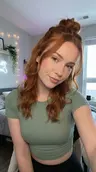
Creators like @itsanamcara follow the winner pattern clearly: the hook addresses the viewer's identity first ("ambitious girl, creative edge"), then immediately promises a concrete list of resources. The viewer knows in two seconds whether this is for them -- that's the bar.
Top 10 hooks to try for freelancing content
-
"You're a [freelancer type] and you don't know these [X] exist."
Why it works: Identity + gap = instant relevance filter. Viewers self-select and feel like the content was made for them.
Adaptation: "You're a freelance designer and you don't know these free contract templates exist."
Loser pattern it avoids: Generic "tips for freelancers" with no audience qualifier. -
"Stop doing [common freelance mistake] -- do this instead."
Why it works: Contrarian framing creates immediate tension. The viewer has probably made the mistake and wants the fix.
Adaptation: "Stop charging by the hour -- do this instead."
Loser pattern it avoids: Leading with a positive tip that has no stakes attached. -
"Here's what [client type] actually wants from a freelancer (and most get it wrong)."
Why it works: Pulls in freelancers anxious about client relationships and lurking clients who might share it.
Adaptation: "Here's what agency clients actually want from a freelance copywriter -- and most get it wrong."
Loser pattern it avoids: One-sided "how to get clients" framing that ignores the client's perspective. -
"I made [specific mistake] when I started freelancing. Here's what I'd do instead."
Why it works: First-hand framing removes the lecture tone. Viewers trust someone who's already been burned.
Adaptation: "I took my first client call without a contract. Here's what I'd do instead."
Loser pattern it avoids: Prescriptive "you should always" advice that sounds like a textbook. -
"[X] free tools every freelancer needs -- you're probably missing [number] of them."
Why it works: Curiosity gap plus saves bait. This format drives saves because it's list-shaped and evergreen.
Adaptation: "5 free tools every freelance developer needs -- you're probably missing 3 of them."
Loser pattern it avoids: Paid-tool roundups that assume everyone has a software budget. -
"Nobody tells new freelancers this about [pricing / scope / clients]."
Why it works: "Nobody tells you" implies insider knowledge. It positions the creator as someone who has actually been in the field.
Adaptation: "Nobody tells new freelancers this about scope creep."
Loser pattern it avoids: Repeating advice that's already in every freelance 101 guide. -
"If I were starting freelancing today, the first thing I'd do is [specific action]."
Why it works: Hypothetical framing forces prioritization. One specific action beats a generic "build your portfolio" answer.
Adaptation: "If I were starting freelancing today, the first thing I'd do is cold-DM 10 agencies, not build a website."
Loser pattern it avoids: Exhaustive advice lists that overwhelm rather than guide. -
"This [contract clause / email script / rate] changed how I freelance."
Why it works: A specific artifact drives saves. Showing a real document, script, or number beats explaining a concept.
Adaptation: Show the actual kill-fee clause on screen while explaining it.
Loser pattern it avoids: Talking about good contracts without ever showing what one looks like. -
"Replying to @[commenter] -- here's exactly how I handle [specific freelance situation]."
Why it works: Reply format signals that a real person asked, which makes the content feel responsive rather than scripted. Community-building is built into the hook.
Adaptation: Use real comment questions about rates, difficult clients, or finding work.
Loser pattern it avoids: Cold explainer content with no social proof that the question is genuinely common. -
"[Ambitious identity] -- here's what you're not being told about [opportunity]."
Why it works: Double identity signal: who you are plus what you're missing. Works especially well for freelancers entering a new market or platform.
Adaptation: "You're ready to freelance internationally -- here's what you're not being told about payment and compliance."
Loser pattern it avoids: Generic "how to start freelancing" framing with no specificity about stage or goal.
Workflow: turn one source video into 3-5 original posts
- Pick the anchor insight. Identify the single most useful point in the video -- the one thing a viewer would save or screenshot.
- Write three different hooks for that insight. Use hooks #2 (contrarian), #6 (nobody tells you), and #8 (specific artifact) as your first three variants.
- Change the format for each. One talking-head, one screen-share or visual demo, one text-overlay with voiceover. Same insight, different delivery.
- Adjust the audience qualifier. Post one version for "new freelancers," one for "freelancers with existing clients," one for a specific niche (e.g. freelance designers vs. freelance developers).
- Let performance data pick the winner. Whichever hook drives the most saves and shares within the first 48 hours is your next series opener. Tools like GEN can monitor which hook variant gains traction and automatically generate the next batch of scripts in that pattern -- so you're not manually analyzing every post to find the signal.
Frequently asked questions
How long should my freelancing hook be?
One to three seconds of spoken content, or a single text-overlay line. The hook's job is to stop the scroll -- every additional word before the payoff is a reason to swipe. If your hook needs a full sentence of setup before the promise, cut the setup.

Should I use the same hook template repeatedly?
Run a template until engagement clearly drops, then rotate. Audiences tune out patterns faster than most creators expect -- roughly every 4-6 posts with the same structure starts to feel formulaic. Keep 3-4 templates in rotation and refresh with a new one each month.
Do these hooks work across platforms, or are they TikTok-specific?
The underlying mechanisms -- identity signal, curiosity gap, specific artifact -- work across short-form platforms. The delivery changes: text-overlays matter more on Instagram Reels where sound is often off by default; spoken hooks carry more weight on TikTok where autoplay pulls viewers in immediately. Adapt the format, not the logic.
What's the fastest way to test which hook works for my audience?
Post the same core content with two different hooks in the same week -- ideally the same day on different platforms. Compare save rate, not view count. Saves indicate the viewer found the content genuinely useful; views can be driven by algorithm distribution alone and tell you less about hook-to-audience fit.
The immediate action: Pick one insight you already have from your freelancing experience, write three hook variants using templates #2, #6, and #10 above, and post them across the next two weeks. The pattern that saves fastest is your next content series.