Top 10 Hooks to Try for Makeup Content (With Templates)
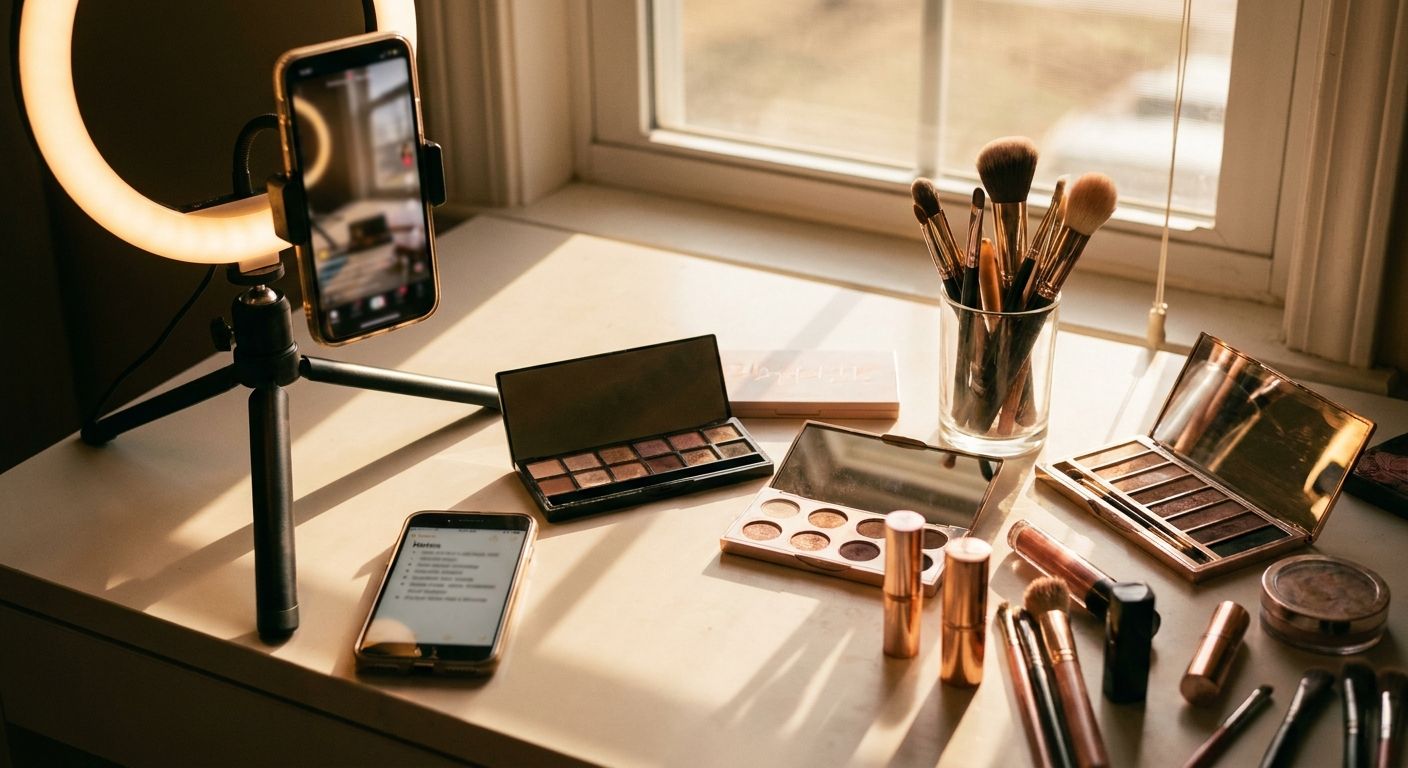
The first three seconds decide everything - here are 10 hooks that actually hold attention
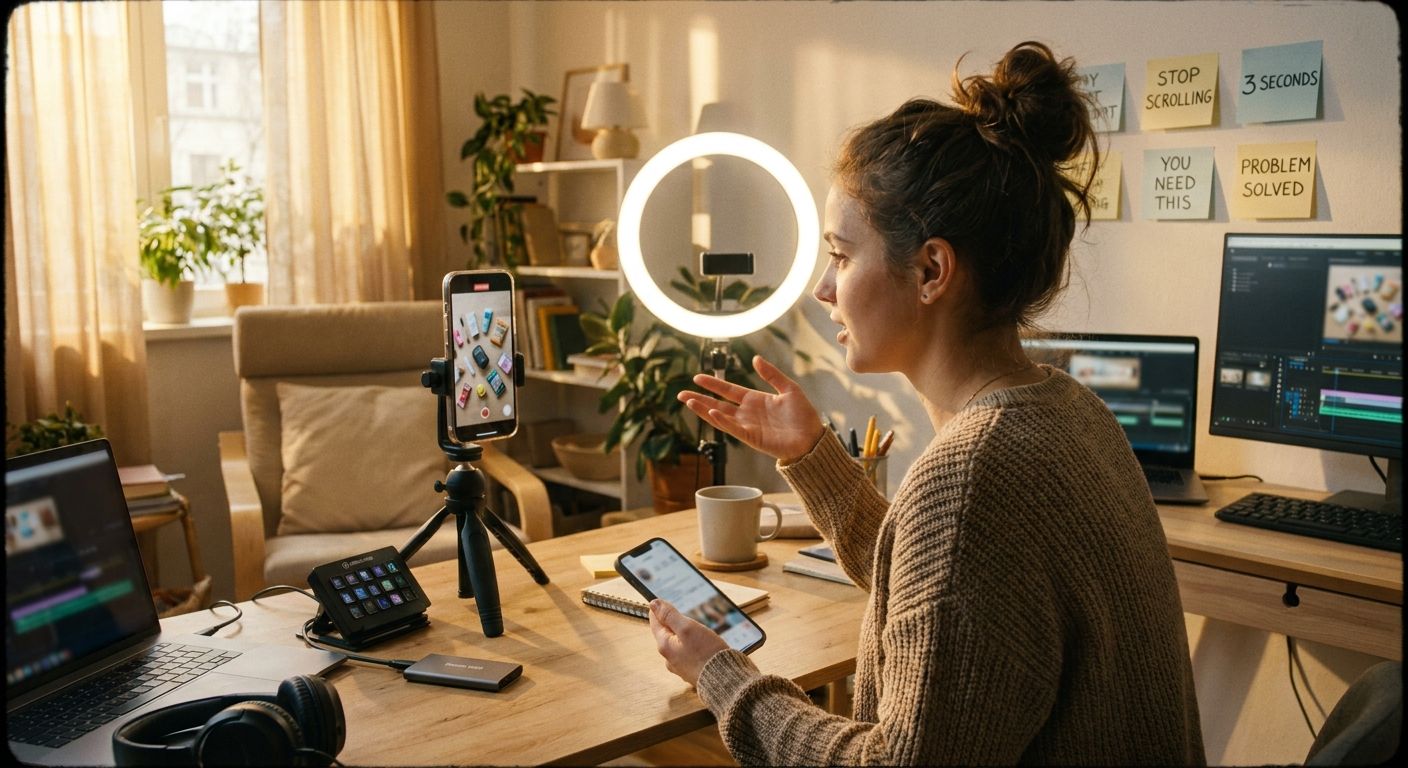
Most makeup content dies before the demo starts. The look is strong, the lighting is clean, the technique is real - but the opening line is generic and the viewer is already gone. These 10 hook templates are built specifically for makeup content: each one has a script, the psychological mechanism behind it, and the weak pattern it replaces.
How a strong hook converts into a saved post
Stops the scroll with a specific promise, contradiction, or result the viewer hasn't seen framed this way before.
Tight close-up or before/after moment that immediately proves the hook wasn't a bait-and-switch.
Show the process clearly, on camera, with genuine enthusiasm - not a voiceover over text slides.
End on the product name, technique name, or specific tip that makes the viewer save rather than just like.
Winners vs. losers at a glance
- Winners show the result or contradiction in the first line, demo on camera, use tight close-ups, and sound genuinely excited about what they're showing
- Losers open with "Hey guys, welcome back," hide the payoff until the end, lead with a discount code or CTA, and rely on text-over-green-screen instead of a real demo
- Winners give the viewer a specific reason to stay ("I'm going to show you exactly how I got this inner-corner highlight without a liner brush")
- Losers assume the look itself holds attention without any framing
10 hook templates for makeup creators
1. The forbidden technique
Template: "You're not supposed to do this with [product], but it gives the best [result]."
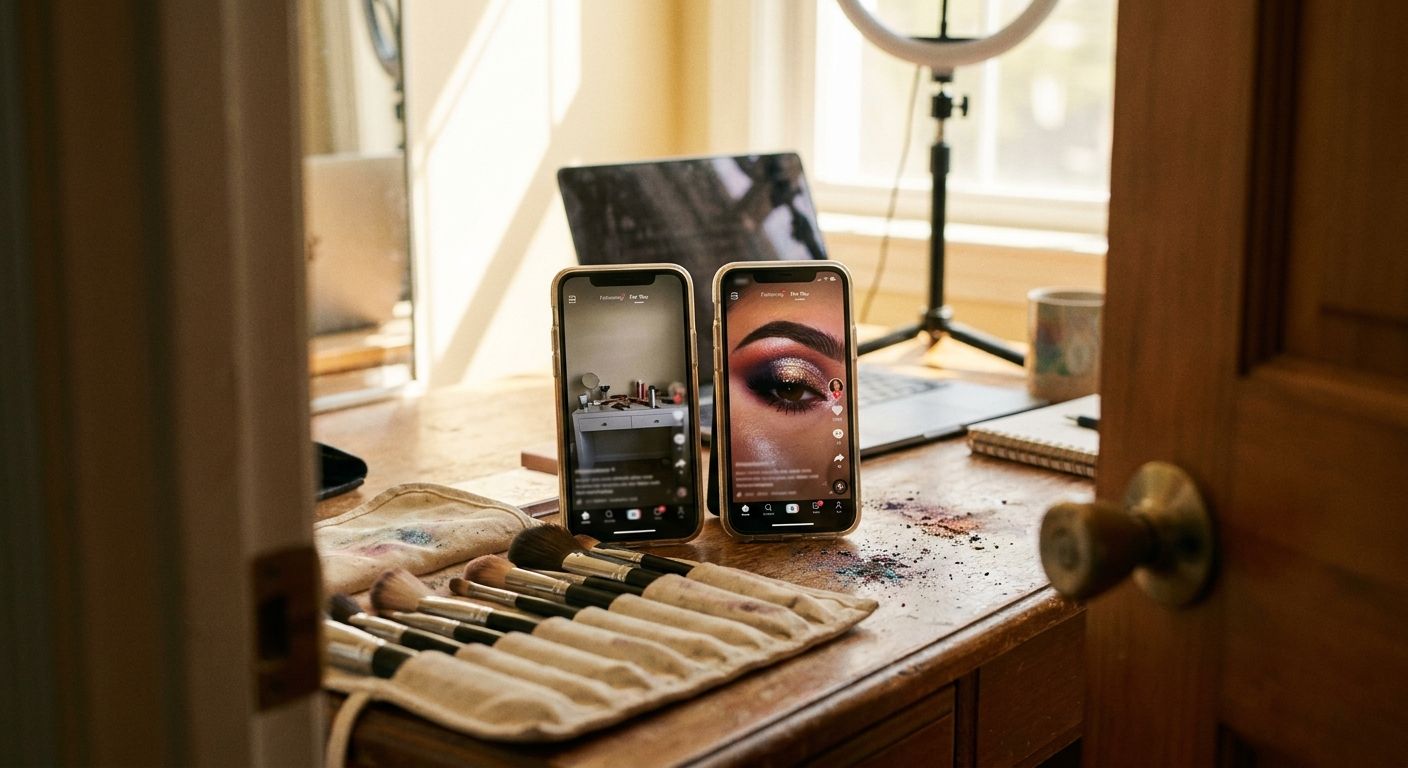
Why it works: It breaks an assumed rule, which creates instant curiosity without promising anything false. The viewer wants to know what the rule is and why you're breaking it.
Makeup adaptation: "You're not supposed to apply setting powder before foundation - but it kills flashback and lasts all day." Demo the technique on skin immediately.
Loser pattern it avoids: "Today I'm going to share some tips..." - no tension, no reason to stay.
2. The specific before
Template: "I used to [specific bad result]. Then I found out [specific fix]."
Why it works: Relatability plus resolution. The viewer maps their own problem onto yours and stays to see the answer.
Makeup adaptation: "I used to get creasing under my eyes by noon no matter what I set it with - then I switched my application order." Show both states on camera.
Loser pattern it avoids: Generic "this product changed my skin" with no specificity about what changed or why.
3. The credibility drop
Template: "I've tried [high number] [products/techniques]. This is the only one that [specific result]."
Why it works: It signals expertise through elimination, not enthusiasm. You've done the work so the viewer doesn't have to.
Makeup adaptation: "I've gone through dozens of setting sprays. The only one that doesn't pill my SPF is this one." Hold the product up in the first two seconds.
Loser pattern it avoids: Gifted-product reveals that open with "I got this PR package" - no stakes, no reason to trust the opinion.
4. The myth correction
Template: "Stop doing [common practice]. Here's what actually works."
Why it works: Contradiction triggers a pause - the viewer has to check if they're doing the wrong thing. Direct-to-camera delivery amplifies it.
Makeup adaptation: "Stop applying blush on the apples of your cheeks. Here's where it actually belongs for your face shape." Demo on your face immediately.
Loser pattern it avoids: Starting a tutorial without explaining why the technique matters or what it fixes.
5. The price contrast
Template: "This [cheap product] does exactly what [expensive product] does - and I have both."
Why it works: It saves money and time. "And I have both" adds credibility because you're not guessing.
Makeup adaptation: Hold both products up immediately. Apply both on opposite sides of your face in the same clip. The visual proof is the hook's payoff.
Loser pattern it avoids: Dupes content that just claims similarity without any on-skin comparison.
6. The countdown with stakes
Template: "Three mistakes that are making your [makeup look] age you / oxidize / crease - number one is the one nobody talks about."
Why it works: Numbered lists create completion bias. "The one nobody talks about" delays gratification just enough to hold attention through the first two items.
Makeup adaptation: Keep each mistake under five seconds of explanation, then immediately show the correction on your face.
Loser pattern it avoids: A long intro before the list, or a list where every item is equally obvious.
7. The real-time reaction
Template: "I just tried [product/technique] for the first time - watch my reaction."
Why it works: Unscripted energy is rare and legible. Viewers can tell when enthusiasm is genuine, and first-use reactions are inherently time-limited, which creates urgency.
Makeup adaptation: Film the actual first application. Don't reshoot it clean. The messiness and the genuine "oh wow" or "hmm, not sure" moment is the content.
Loser pattern it avoids: Over-produced reviews that feel scripted and lose the spontaneous credibility that drives saves and shares.
8. The identity claim
Template: "If you have [specific skin type/tone/concern], this is the only [product category] you need."
Why it works: Hyper-targeted hooks outperform broad ones because the right viewer self-selects aggressively. A smaller audience that feels directly spoken to saves and shares at a higher rate.
Makeup adaptation: "If you have deep skin and struggle with ashy setting powder, this is it." Name the skin tone, name the problem - the specificity does the work.
Loser pattern it avoids: "This works for all skin types" - technically inclusive, functionally invisible.
9. The process reveal
Template: "Here's how I actually get [specific result] - it's not what you think."
Why it works: "Not what you think" implies hidden knowledge without requiring you to invent a controversy. It rewards the viewer for staying.
Makeup adaptation: "Here's how I actually get my liner this precise - it's not a steady hand, it's a two-step method." Open on a tight close-up of the finished eye before pulling back to show the process.
Loser pattern it avoids: Starting the tutorial at step one without showing the destination first.
10. The challenge frame
Template: "I only used [constraint] to do a full face - here's what happened."
Why it works: Constraints make outcomes uncertain, and uncertainty drives watch-through. The viewer wants to see if you succeeded or failed.
Makeup adaptation: "I only used drugstore products under $8 each to recreate this editorial look." Show the editorial reference at the start, the final result at the end. The gap between the two is the tension.
Loser pattern it avoids: "Get ready with me" without any stakes or destination - watchable, but rarely saved.
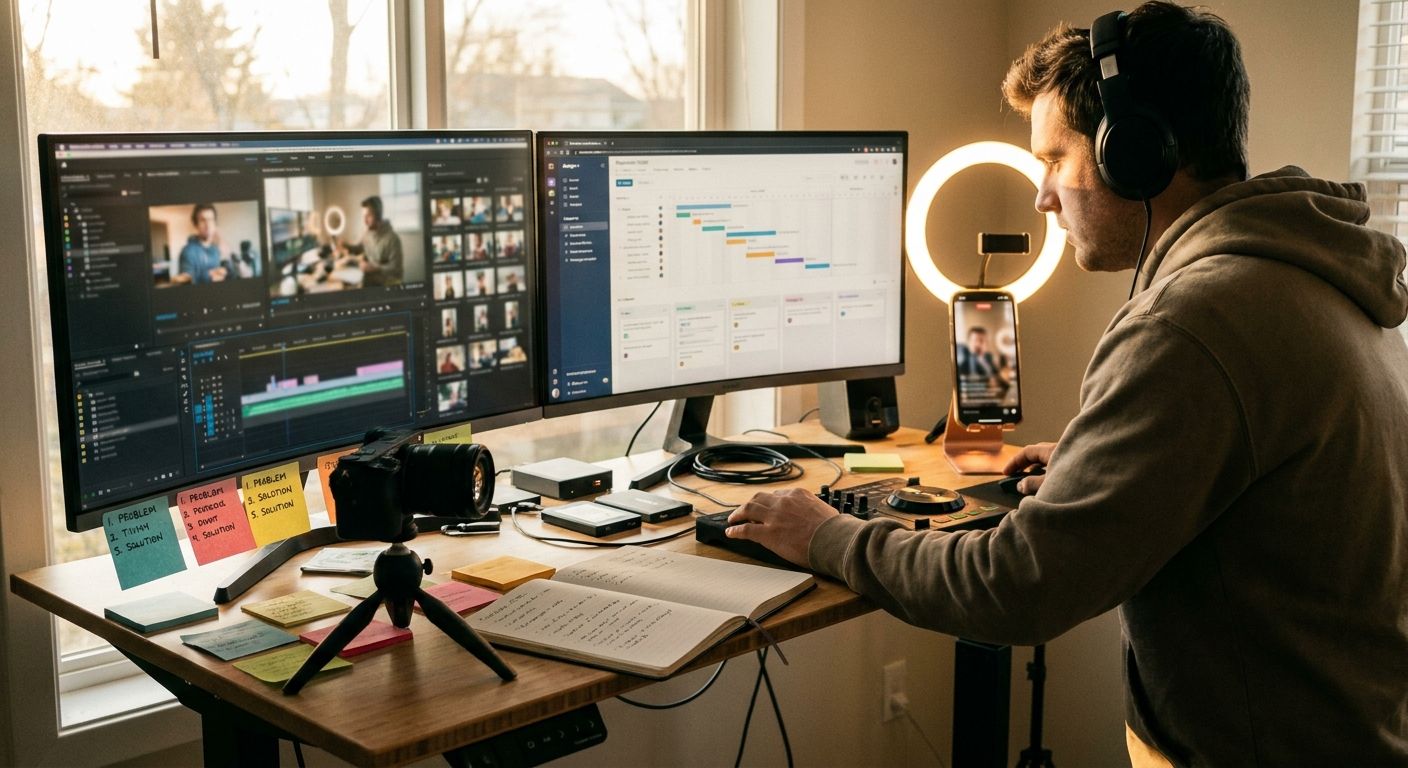
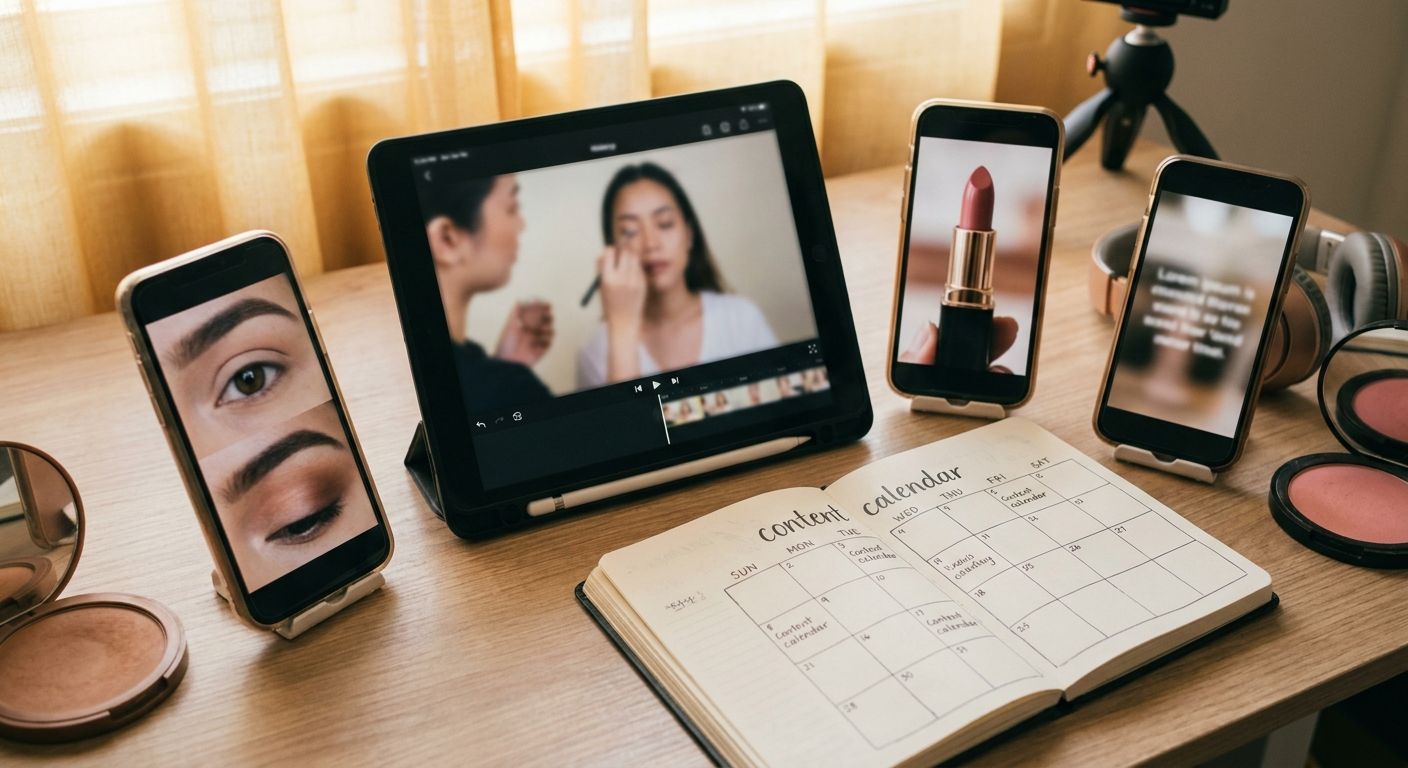
Turn one source video into 3-5 posts
- Identify the core technique - isolate the one step in your video that delivers the most visible result (the product application, the blending method, the placement decision).
- Apply hook 9 (Process reveal) - reframe the full tutorial as a before/after: finish shot first, then the method. This is post one.
- Extract the mistake - clip or reshoot just the "wrong way" moment from hook 4 (Myth correction). Show the common error, then cut to your fix. Post two.
- Reframe for a specific identity - using hook 8, re-record a 15-second version of the same technique addressed directly to one skin type, tone, or concern. Post three.
- Add the constraint - if the technique uses a specific product, run hook 5 (Price contrast) or hook 10 (Challenge frame) as a short follow-up. Post four or five.
An agent like GEN can watch which hook variant gets the strongest early engagement signal and automatically generate the next round of scripts weighted toward what's actually working - instead of you manually tracking it across five posts and guessing.
Frequently asked questions
Do these hooks work the same on Instagram as on TikTok?
The psychological mechanisms are platform-agnostic - curiosity, contrast, and specificity work everywhere. Delivery adjusts: short-form video favors spoken hooks in the first line; static carousels need the hook as the first-slide headline with the result visible immediately.
Should I use a text overlay and a spoken hook at the same time?
Yes, but keep them aligned, not redundant. The text overlay should carry the hook's core phrase; the spoken line should add one detail the text doesn't have. Mismatched overlays and speech create cognitive friction and viewers scroll out.
How often should I rotate hooks before testing a new one?
Test each hook across at least three posts on different topics before drawing a conclusion. A hook that "failed" on a tutorial might land on a product review - the variable is often topic fit, not hook quality.
What's the fastest way to spot which hooks are working?
Watch completion rate and saves, not likes. A high save rate on a low-like post means the content is genuinely useful: the hook worked but the topic has a quieter audience. That's a signal to go deeper into the topic, not to drop the hook format.
The fastest improvement available to most makeup creators is replacing the first line. Pick one hook from this list, apply it to a post you were already planning, and compare the watch-through against your baseline. That single test will tell you more than any amount of strategy reading.