Top 10 Hooks to Try for TikTok Shop (And Why They Actually Convert)

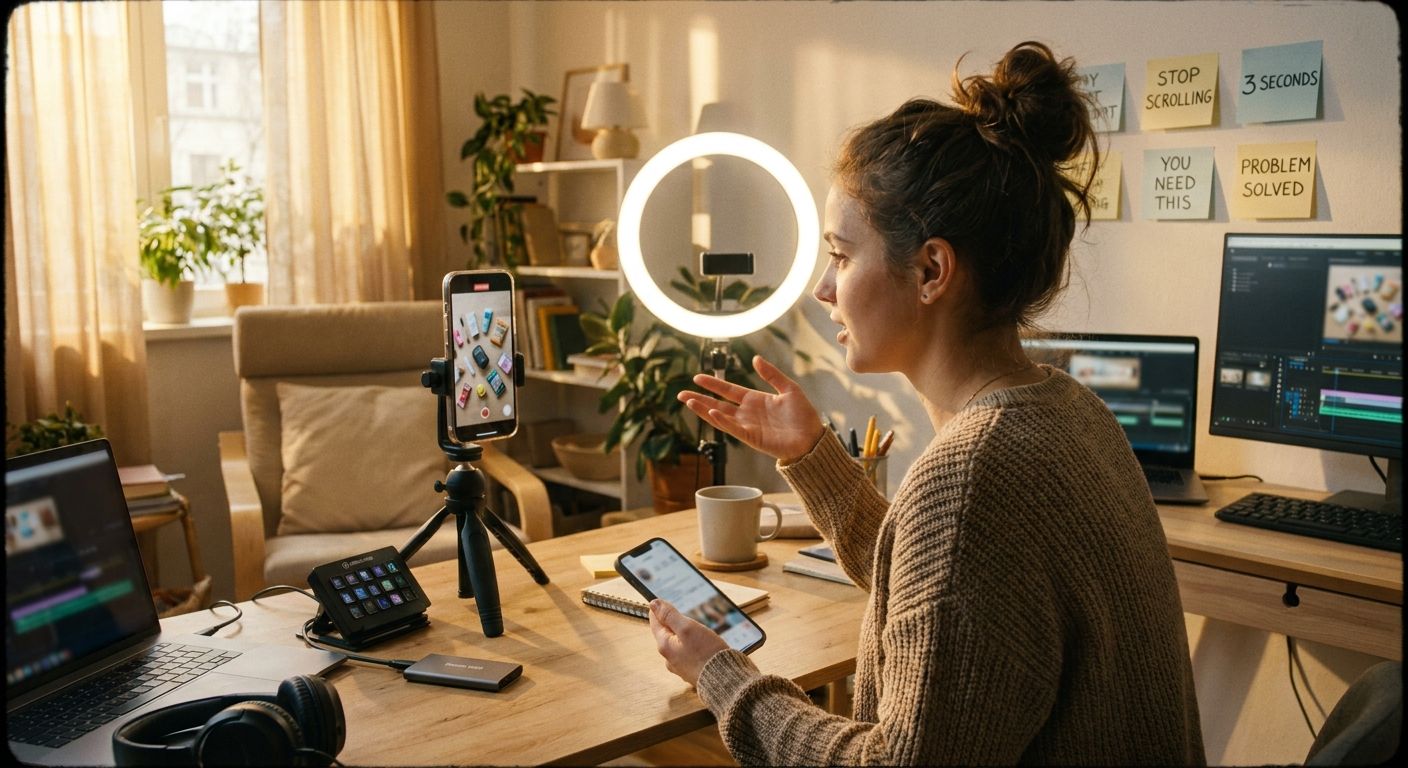
The hook is your entire pitch -- get it wrong and the product never matters
On TikTok Shop, most lost sales happen in the first two seconds -- not because the product is weak, but because the hook gave the viewer zero reason to stay. The fix isn't a longer video or more hashtags. It's a sharper opening that makes the payoff obvious before curiosity runs out.
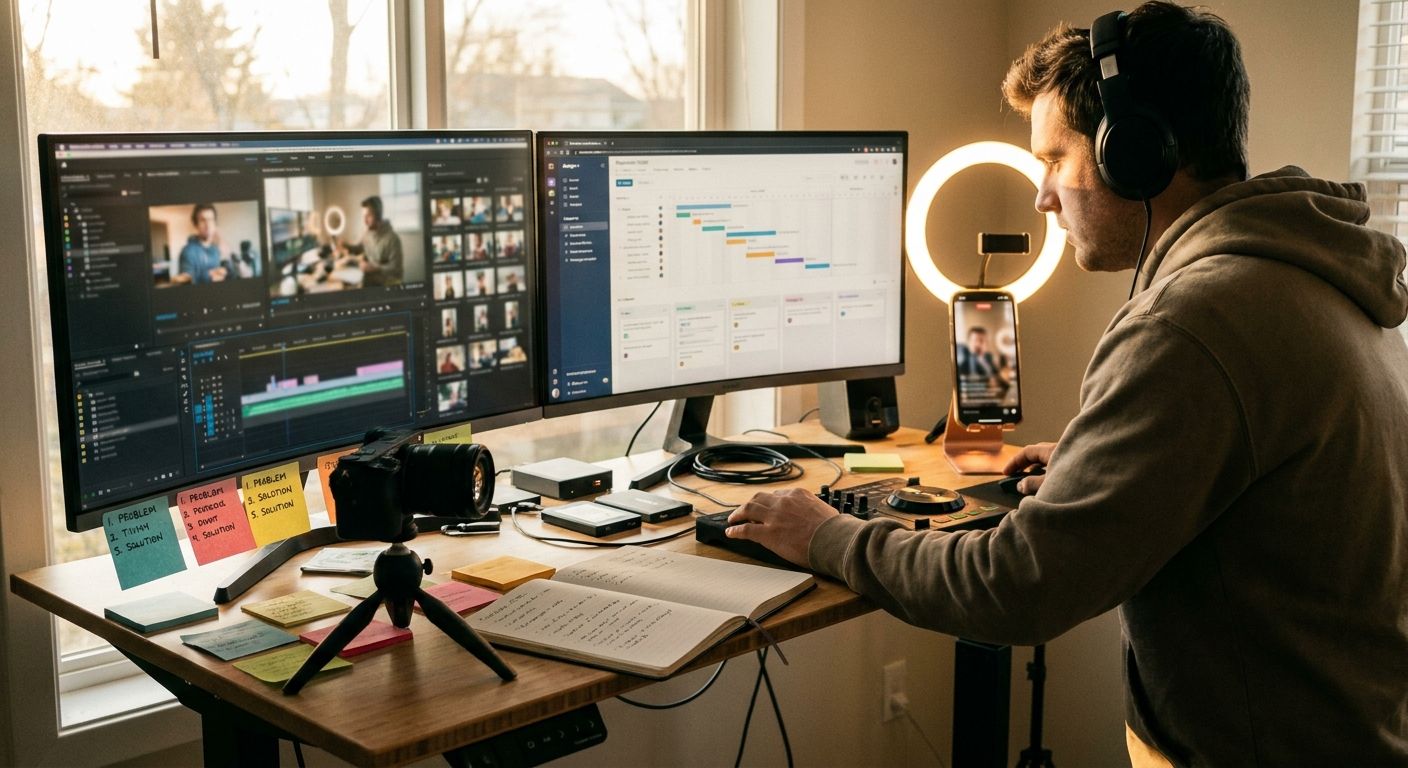
How a strong hook drives TikTok Shop conversion
Name the problem, the result, or the contrast -- before the viewer has time to swipe.
Tight close-ups, visible process, and genuine reaction -- not a static product shot.
Deliver on the hook's promise -- the before/after, the reveal, or the satisfied reaction.
One specific nudge -- 'linked below', 'check the shop tab' -- not a hard-sell countdown.
Winners vs. losers: the real gap
- Winners surface the result or contrast in the first line, demo the product in motion with tight framing, and sound like someone who actually uses it.
- Losers open with "Hey guys!", hide the payoff until the 20-second mark, or lead with a discount CTA that signals "this is an ad, skip it."
- Winners give the viewer a specific reason to keep watching ("watch what happens when I apply this").
- Losers rely on hashtag volume or video length as the conversion lever -- neither works if the hook fails.
- Winners shoot direct-to-camera while demoing, with visible hands and real settings (kitchen counter, bathroom shelf).
- Losers use green-screen or text-only formats for tactile products where the physical experience is the whole point.
10 hooks to try for TikTok Shop
1. The problem-first opener
Template: "If you've ever struggled with [specific problem], this is the thing I wish I'd found sooner."

Why it works: Frames the product as a solution before the viewer has processed it as an ad. Self-identification happens instantly.
Adapt it: @hilderdn5mk's no-drill hook video does exactly this -- it opens on the wall-damage problem before showing the adhesive hook solution.
Loser pattern avoided: Leading with the product name or brand, which triggers the ad-skip reflex.
2. The instant visual contrast
Template: Open on the "before" state -- messy, broken, empty -- cut immediately to the "after" with the product in frame.
Why it works: The brain processes visual contrast faster than spoken words. No narration needed for the first two seconds.
Adapt it: Works well for organization, home, and car-accessory categories -- show the cluttered car seat, then the hooks installed.
Loser pattern avoided: A slow pan across the product packaging with ambient music. That's a TV ad from 2008.
3. The specific use-case pin
Template: "This is the only thing I keep in my [kitchen/car/bathroom] now."
Why it works: Naming a specific context triggers the viewer's own mental image of that space. They're already imagining owning it.
Adapt it: Pair with a tight shot of the product in that exact context -- not a white-background studio shot.
Loser pattern avoided: "Great for any room!" -- vague positioning kills purchase intent.
4. The surprised-expert reveal
Template: "I've tried [category] products for years -- this one actually changed my routine."
Why it works: The credibility signal comes upfront. Viewers trust a skeptic more than an evangelist.
Adapt it: Best delivered to camera with natural inflection, not a scripted-sounding read.
Loser pattern avoided: Unearned superlatives ("the BEST product ever!") with no context -- high energy with no credibility anchor.
5. The "watch what happens" suspense hook
Template: "Watch what happens when I [do the thing the product does]."
Why it works: Creates a micro-commitment. The viewer has to stay to see the payoff -- pure completion-rate fuel.
Adapt it: Works for any product with a visible transformation: adhesives holding weight, skincare absorbing, organizers snapping into place.
Loser pattern avoided: Telling the viewer what the product does instead of showing them.
6. The relatable objection flip
Template: "I thought I didn't need this -- then I actually tried it."
Why it works: Mirrors the viewer's hesitation and immediately resolves it. Converts skeptics, not just fans.
Adapt it: Name the specific objection ("I thought it would leave marks on my wall") for maximum resonance.
Loser pattern avoided: Assuming the viewer is already sold -- most aren't, and this hook meets them where they are.
7. The context-triggered opener
Template: "If you [drive / cook a lot / have a small bathroom], you need to see this."
Why it works: Hard-targets a subset of viewers who immediately self-select. Lower reach, much higher relevance -- and relevance drives saves and clicks.
Adapt it: @marshlmym6k's car-seat hook video targets car owners with a specific context before showing the product.
Loser pattern avoided: Broad "everyone will love this" framing that resonates with no one specifically.
8. The bold claim + immediate proof
Template: "[Strong claim about the product] -- let me show you exactly why."
Why it works: The claim creates curiosity; the immediate proof fulfills the contract. The viewer stays because you promised evidence, not just hype.
Adapt it: Keep the claim specific and verifiable on-camera ("holds up to [weight you demonstrate]", not "incredibly strong").
Loser pattern avoided: A claim with no visual proof -- that's just an assertion, and assertions don't convert.
9. The "thing I didn't know I needed" frame
Template: "I didn't know this existed until last week -- now I have three."
Why it works: Taps discovery psychology. TikTok Shop's native loop runs on product discovery; this hook matches the platform's own promise.
Adapt it: Genuine delivery matters more here than with any other hook. If it sounds scripted, it tanks.
Loser pattern avoided: "I found this on TikTok Shop" as the entire hook -- that's setup, not a hook.
10. The stacked-benefit speed run
Template: "No drilling. No damage. Holds [what it holds]. Works in [X places]. Here's how." -- delivered in under five seconds, on-camera.
Why it works: Compresses the value proposition to its densest form. No wasted seconds. The viewer gets everything they need to decide whether to keep watching.
Adapt it: This is the hook @hilderdn5mk uses for the glacier-ripple adhesive hook -- stacking "no marks, no drilling, kitchen/bathroom/entryway" in rapid succession.
Loser pattern avoided: A slow unboxing intro that buries the benefits in the back half of the video.
Turning one source video into 3-5 posts
- Identify your core demo moment -- the single 3-5 second clip where the product clearly does the thing. That's your anchor asset.
- Write five hook variants from the list above -- problem-first, visual contrast, suspense, objection flip, stacked benefit. Each becomes a new opening.
- Record or clip a new opening for each hook -- same demo, five different first-two-seconds. This is where an agent like GEN earns its keep: it can analyze your best-performing hook pattern, generate script variants, and queue them as separate posts rather than you manually recutting each one.
- Swap context in captions -- kitchen audience, bathroom audience, entryway audience. Same product, three different self-selection triggers.
- Test and kill fast -- if a hook variant gets weak watch-time in the first 24-48 hours, replace the opener, not the demo. The demo is rarely the problem.
Frequently asked questions
How long should a TikTok Shop hook be?
Two seconds maximum for the hook itself -- the first spoken line or the first visual action. If the viewer has no reason to stay by second three, most won't. The rest of the video can run longer, but the hook must be immediate.

Should I mention the price or discount in the hook?
Almost never. Leading with a discount signals "paid promotion" and triggers the skip reflex. Surface the problem or result first; mention price naturally in the middle or end of the video if at all. The exception is a genuinely extreme price contrast where the deal is the story -- but even then, frame it as a discovery, not a sales pitch.
Can I reuse the same hook template across different products?
Yes -- hook templates are frames, not scripts. The stacked-benefit speed run works as well for a car organizer as it does for an adhesive hook, because the template adapts to whatever the product's core benefits are. Rotate three to four templates and track which one your audience responds to by category.
What's the fastest way to find which hook is working?
Watch your 3-second retention drop-off across hook variants for the same underlying video. If one opener consistently holds more viewers past the five-second mark, that's your signal -- not total view count, which can be inflated by the algorithm serving it to cold audiences. Tools like GEN can run hook variation tests automatically and flag the winning pattern across your post history without you manually pulling analytics each week.
The move: Pick two hooks from this list that you haven't tried yet, record them against your next product demo, and post them 24 hours apart. Watch 3-second retention, not total views. That single test will tell you more about your specific audience than any general framework -- including this one.