Top Ecommerce DTC Video Ads November 2026: 3 Winning Archetypes Broken Down Frame by Frame

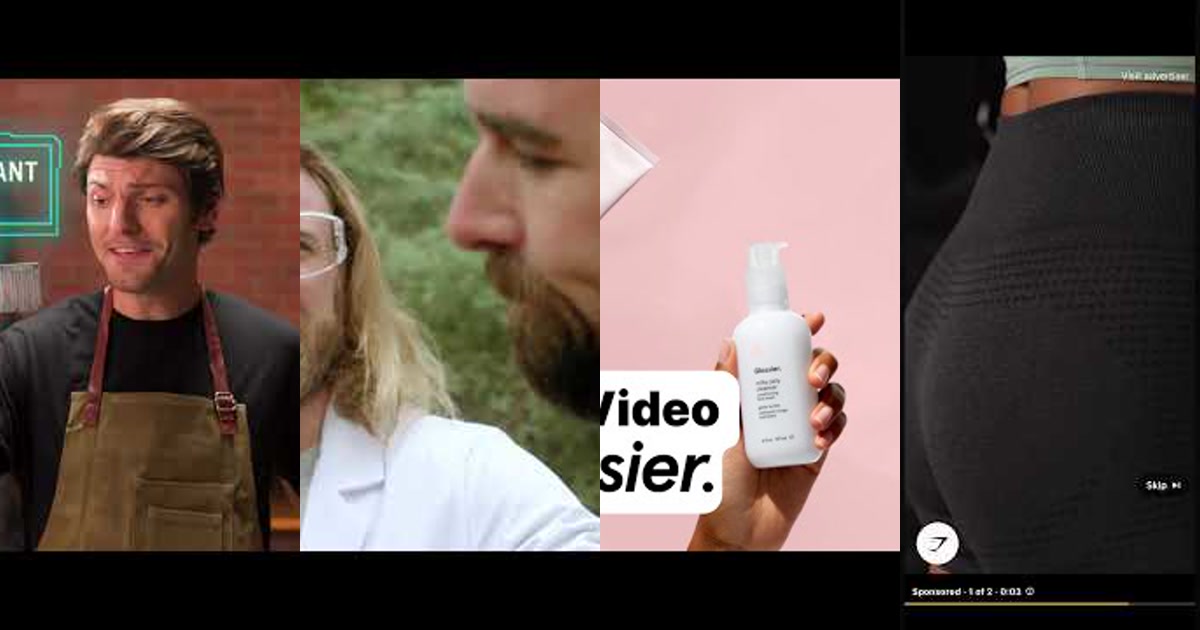
Top ecommerce DTC video ads in November 2026 win on compression, not cleverness
The strongest ecommerce and DTC video ads right now do one job well: they turn a product claim into visible proof within the first 8-12 seconds. The best ads are not just better edited. They make the viewer do less work by pairing fast pain recognition, a concrete mechanism, and proof that still makes sense on mute.
The November 2026 DTC ad compression loop
The viewer identifies the problem before the brand explains the product.
The ad shows why the product works, not just what it claims.
Reviews, comments, comparisons, and usage footage reduce purchase anxiety.
The CTA matches the viewer’s remaining objection: price, fit, proof, or urgency.
- Best pacing: 5-beat structure across 24-30 seconds, with the mechanism visible before second 12.
- Best hook style: pain recognition or outcome in motion, not abstract brand positioning.
- Best creative variable: change the first 3 seconds before changing the offer.
- Best production model: one source shoot or product asset set → 10-20 structured variants through AI video workflows.
- Biggest losing pattern: ads that explain benefits before making the problem visually obvious.
Archetype 1: the UGC problem-solution / relatable frustration winner
This format still works because it sounds like a complaint before it sounds like an ad. Most brands open with "I found this product." The stronger version opens with a recurring irritation the viewer already knows how to describe.
Beat-by-beat timeline
- 0-3s Hook: Creator on-camera, slightly imperfect framing. Text: "If your [daily task] takes more than 2 minutes, this is why."
- 3-8s Tension: Show the old behavior failing: mess, delay, waste, discomfort, repeated workaround.
- 8-18s Mechanism: Product enters as a physical fix. Show the hinge, texture, seal, angle, formula, attachment, or before/after state.
- 18-24s Proof: Quick result: side-by-side, time saved, cleaner surface, better fit, packed bag, organized drawer, smoother skin, quieter device.
- 24-30s CTA: "If you deal with this every day, get the starter set while it's still discounted."
Script formula
"I thought [annoying situation] was just normal until I realized [specific cause]. This fixes it by [visible mechanism]. Here's the difference after [one use / one week / one setup]. If you've been using [inferior workaround], this is the upgrade."
The conversion trigger is identity relief. The viewer buys the end of a small repeated tax. That is why the best version agitates the workflow, not the emotion. "This drawer eats my makeup every morning" beats "I hate being disorganized."
On-screen text placement
- Top third: pain statement, 7-10 words max.
- Middle third: mechanism label during demo: "magnetic seal," "wide-mouth opening," "no-drip edge."
- Bottom third: captions, but keep them above app UI and shopping overlays.
For related scripting systems, see AI video script generation workflows and UGC ad frameworks for performance teams.
Archetype 2: the kinetic feature demo / macro aesthetic winner
This ad looks almost too simple: hands, product, cuts, satisfying sounds, close-ups. It works when the product has tactile proof: pouring, snapping, stretching, wiping, compressing, glowing, folding, sealing, stacking.
Beat-by-beat timeline
- 0-3s Hook: Macro shot of the product doing the most satisfying thing it can do. No preamble.
- 3-8s Tension: Flash the inferior state: spill, clutter, weak material, poor fit, dull surface, slow process.
- 8-18s Mechanism: Rapid sequence of 4-6 product features, each cut lasting roughly 1-2 seconds.
- 18-24s Proof: Before/after or stress test: water resistance, capacity, grip, durability, texture, speed.
- 24-30s CTA: Product lineup, offer, one friction reducer: "ships from," "bundle available," "fits standard size," or "TikTok Shop checkout."
Script formula
"Watch what happens when [product action]. It [feature 1], [feature 2], and [feature 3] without [common failure]. That's why it replaces [old solution]."
This format has to work on silent autoplay. If the viewer mutes the ad and still understands the claim, the creative has a chance. If the voiceover carries the mechanism, the ad is fragile.
Visual cues that usually separate winners from expensive product videos
- One action per cut: do not show hands adjusting, preparing, or searching.
- Texture first: surfaces, seams, fibers, liquid, steam, compression, shine.
- Camera within arm's reach: ecommerce demos feel more believable when the viewer can imagine holding the item.
- Readable labels: feature text should appear beside the action it describes, not in a generic caption block.
Tools like HeyGen and Arcads can help with avatar-led variants, but for this archetype the best asset is often the raw product motion itself. AI should multiply cuts and scripts. It should not replace the tactile proof.
Archetype 3: the social proof / objections-crusher winner
This format works later in the funnel and during scale because it does not create desire. It removes reasons not to buy. The strongest version starts with a skeptical comment, review screenshot, or comparison frame and treats the ad like a rebuttal.
Beat-by-beat timeline
- 0-3s Hook: Green-screen comment: "Is this actually better than the cheaper one?"
- 3-8s Tension: Show the objection: price, size, fit, quality, setup, skin tone, durability, cleaning, shipping.
- 8-18s Mechanism: Compare the product against the alternative in a controlled visual: side-by-side use, material close-up, ingredient texture, capacity test.
- 18-24s Proof: Review montage or creator confirmation: "Here's what changed after using it."
- 24-30s CTA: "If that was your hesitation, start with [entry bundle / sample / size guide / guarantee]."
Script formula
"A lot of people ask if [objection]. Fair question. Here's the difference between [common alternative] and this. The key is [mechanism]. So if you care about [buyer priority], this is the one I'd choose."
The psychology is risk reversal. DTC buyers rarely need one more adjective. They need the ad to name the exact doubt blocking checkout and resolve it with evidence specific enough to survive scrutiny.
Winner vs. loser creative matrix
| Creative element | Top scaling ads | Losing ads |
|---|---|---|
| First 3 seconds | Open on pain, result, objection, or product motion | Open on logo, packaging, lifestyle montage, or vague setup |
| Mechanism | Shows why it works with a physical or visual cause | Lists benefits without proof |
| Pacing | New visual information every 1-2 seconds | Same angle held while voiceover explains |
| Text overlays | Labels the active proof on screen | Repeats the voiceover or crowds the frame |
| Proof | Before/after, side-by-side, review, comment, stress test | Generic testimonial language |
| CTA | Matches the remaining objection | Uses the same "shop now" ending on every variant |
The GEN video automation blueprint
The operational problem is not knowing these structures. It is making enough disciplined variations before creative fatigue catches the account. A daily testing cadence can require 10-20 new cuts per product angle, especially once hooks start decaying.
- Start with one winning structure. Choose UGC frustration, kinetic demo, or objection-crusher based on the product's strongest proof asset.
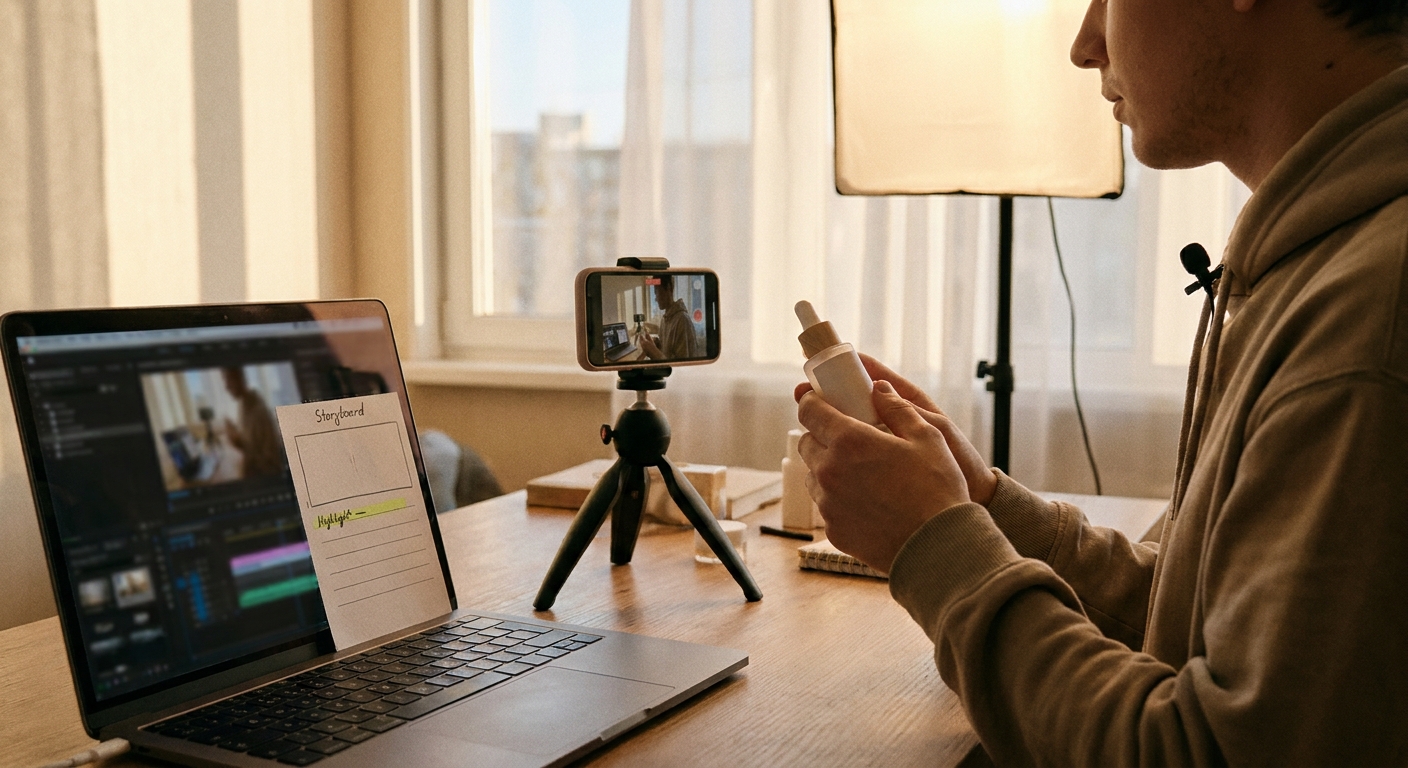
- Build a Vidsheet by beats. Create rows for hook, tension, mechanism, proof, CTA. Each row gets script copy, visual instruction, caption text, and asset reference.
- Generate hook families. Produce 5 pain hooks, 5 outcome hooks, 5 objection hooks, and 5 comparison hooks. Do not change the whole ad yet.
- Swap proof modules. Rotate side-by-side, review screenshot, macro demo, and creator reaction while keeping the same core claim.
- Publish in controlled batches. Keep offer, landing page, and audience stable long enough to identify the creative variable doing the work.
GEN Vidsheets help a performance team treat video ads like structured creative data: one row per scene, one column per variable, with automated generation and publishing instead of manual re-shooting for every small test. The goal is not "AI-made ads." The goal is faster isolation of which hook, proof type, and CTA actually moves buyers.
Practical benchmarks for November 2026 testing
Use these as operating targets, not universal laws:
- Hook hold: if the first 3 seconds are weak, do not rescue the ad with a better CTA. Rewrite the opener.
- Mechanism timing: if the product has not demonstrated the reason it works by second 12, the ad is probably over-explaining.
- Variant ratio: for every core concept, produce at least 5 hook variants before declaring the angle dead.
- Fatigue signal: when spend rises while thumbstop and click intent soften together, refresh the first half of the ad before changing the offer.
Frequently asked questions
How fast do ecommerce video ads fatigue?
Often within days at meaningful spend, especially if the ad relies on novelty, a single creator face, or one hook. Mechanism-led ads usually have more remix potential because the proof can be repackaged from multiple openings.
What is a reasonable testing spend for a new DTC video concept?
Think in batches rather than one-off ads. A practical approach is to test enough spend to compare several hooks under the same offer and landing page conditions. If the product economics are tight, start by testing hook retention and click intent before scaling into conversion-heavy budgets.
What hook-to-hold benchmark should teams use?
Use your own account baseline. A strong hook should clearly outperform your recent median first-3-second hold. If it does not, do not debate the body copy yet; the viewer did not stay long enough for the body to matter.
Should brands use AI-generated video for DTC ads?
Yes, when AI is used to scale structured variations, not to fake product proof. Use AI for scripts, edits, captions, avatars, localization, and remixing. Keep the actual product mechanism visually honest.
Specific takeaway: the top ecommerce DTC video ads in November 2026 are not winning because they look bigger. They win because every second removes uncertainty. Build around pain, mechanism, proof, and objection-specific CTAs, then use automation to test the combinations faster than fatigue can erase the signal.